From the Workshop

December 24, 2011

Window to my workshop 59

Mistakes – what is a mistake?
There are those that will always deny making mistakes and there are those that can keep smiling when they have made one as they have thought of someone to blame it on. So many projects can go off course along their journey, or find that the goalposts have been moved. Those with the creative thinking processes, for good or bad, can always find a solution; then only count its merits.
In the case of the No 10 plane, and its simplicity, there seemed nowhere to go wrong, but to be 100% sound in my mind I need to alter some of its dimensions. Having slept on it I have decided it is folly to rescue anything I am not completely happy with. This doesn’t sound much – just need to remake the sides and procure some new infill material. I have come too far now to take any risks. Reputations can’t be compromised. Luckily I haven’t had to use the reject bin too much over the years – it is due to put on weight.
Apologies to those waiting for their planes but as you can see from the blog below there is still steady progress.
—————–
In the making of my planes I rely quite a lot on a manual mill. So far throughout the making of these planes the machine has been in constant use.


There is a lot to be said for a good quality manual mill with a DRO. The skill is in setting up and operating these machines and along with essential hand working I am able to achieve standards that are impossible to achieve with hand work alone. In my cabinet making and joinery days there was always a division between machinists and hand workers. Why? I have always wanted to be involved in every aspect of the project from initial thought to the finished item. This is why I never outsource any of my work.


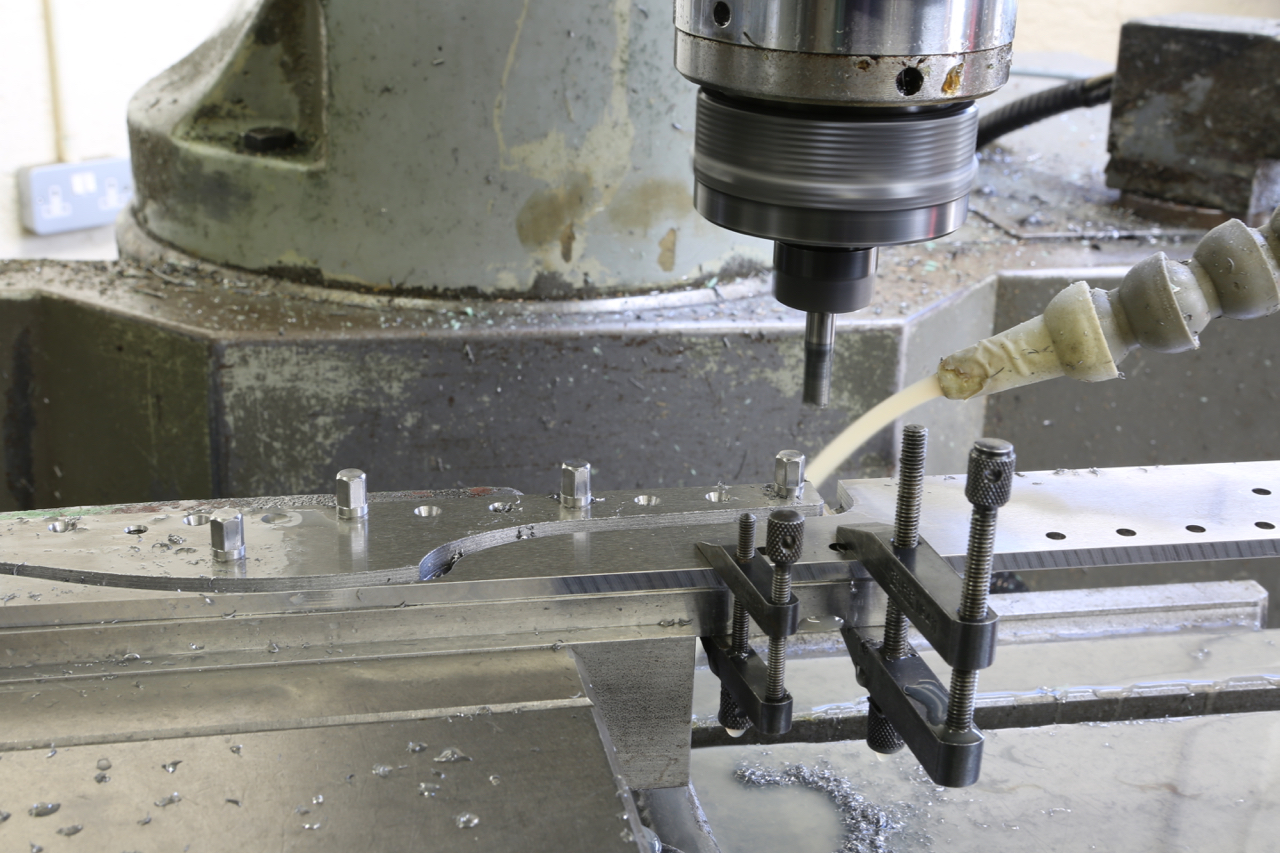
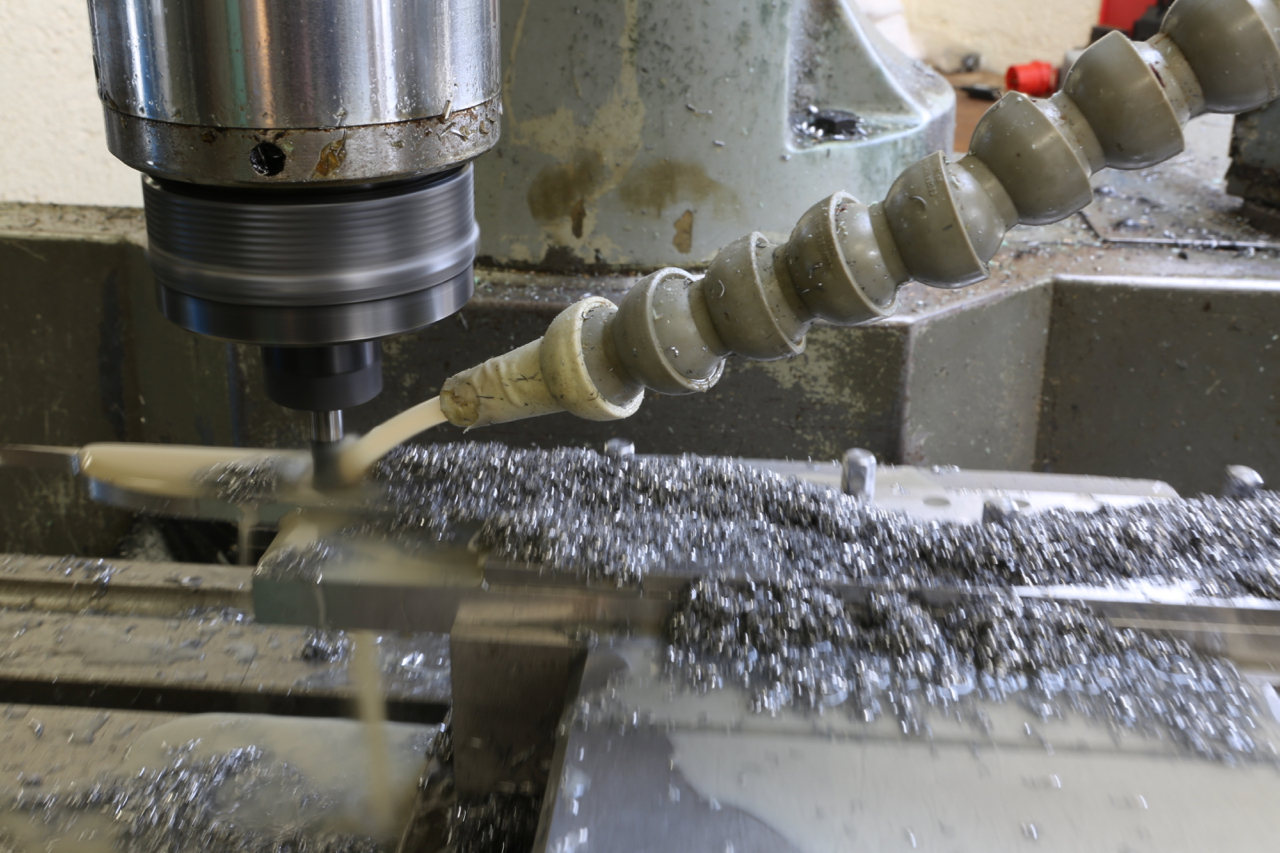
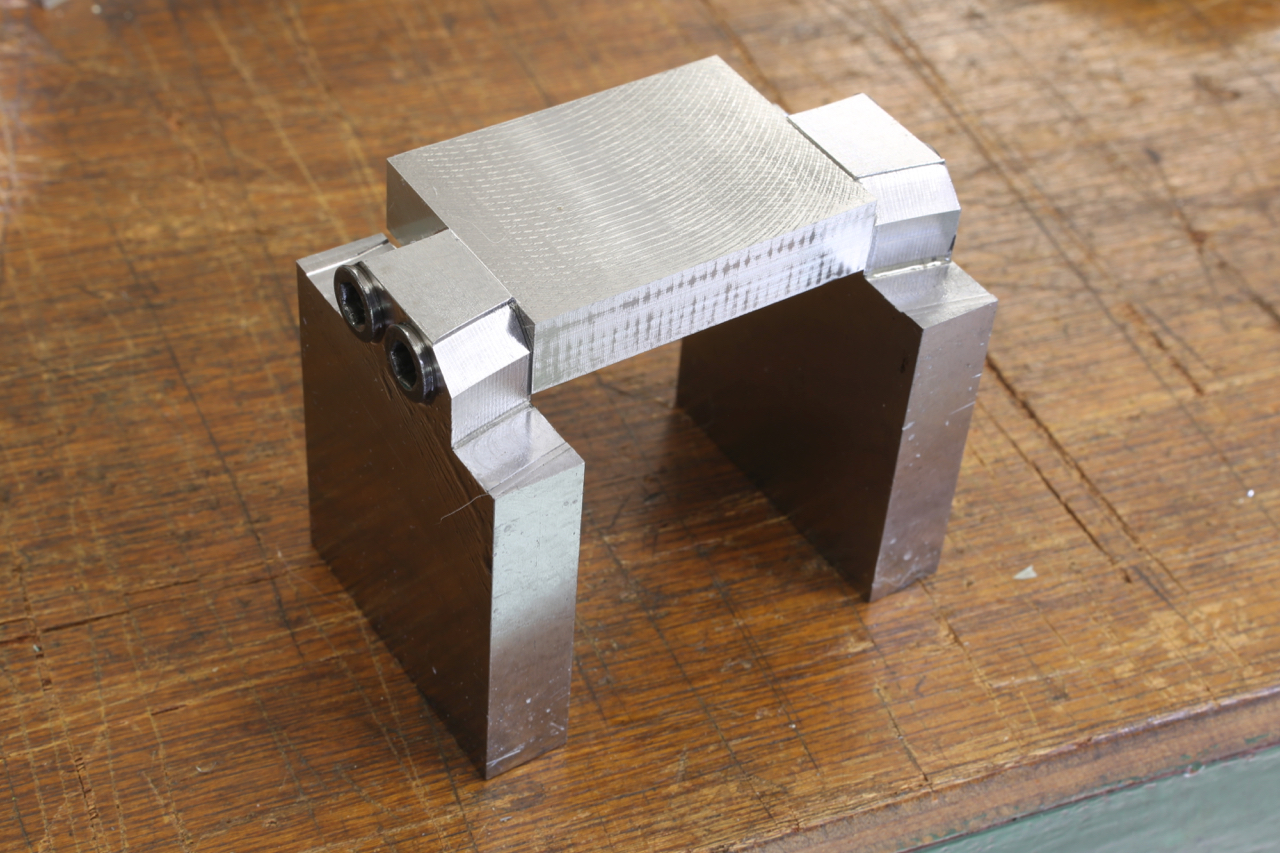
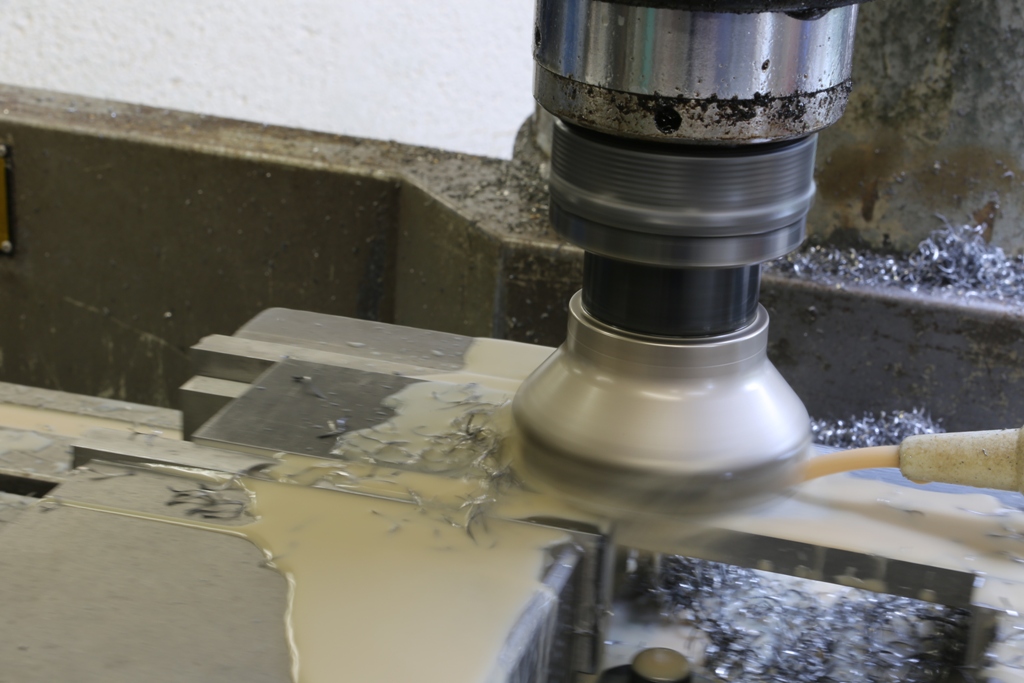
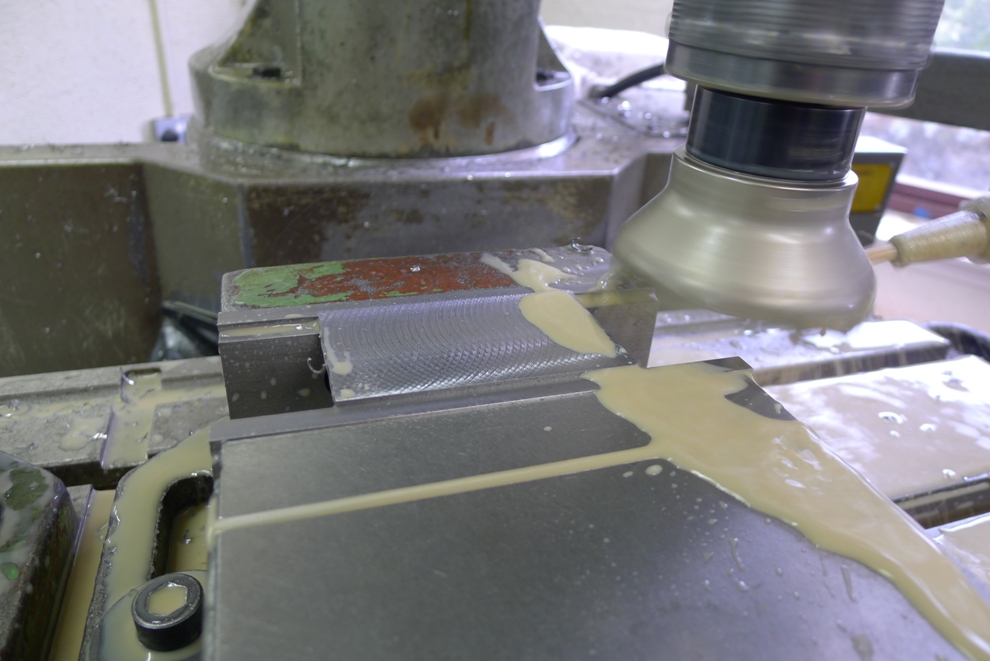
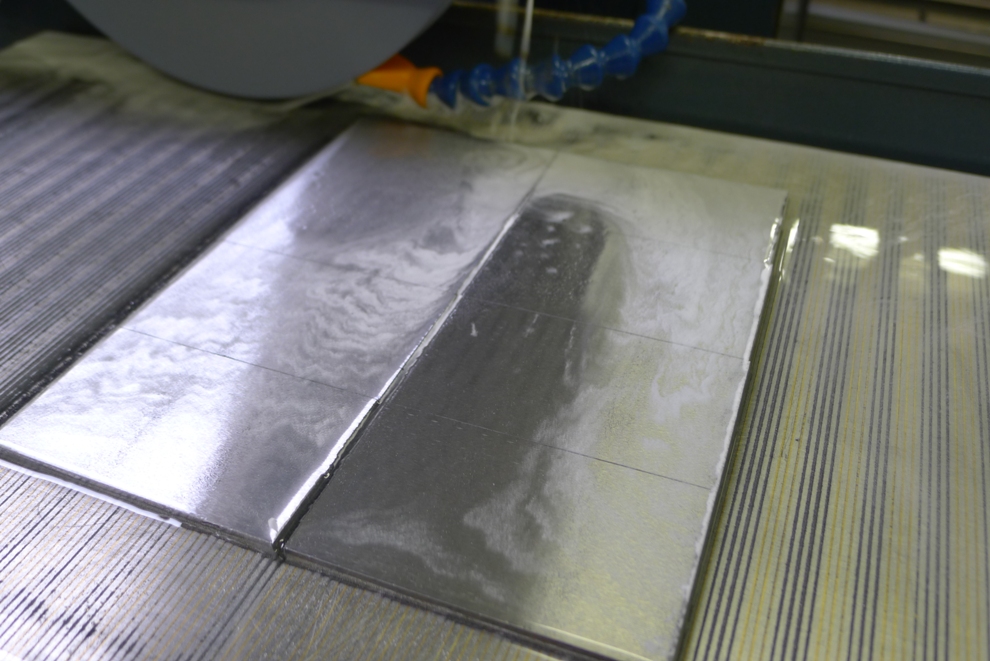
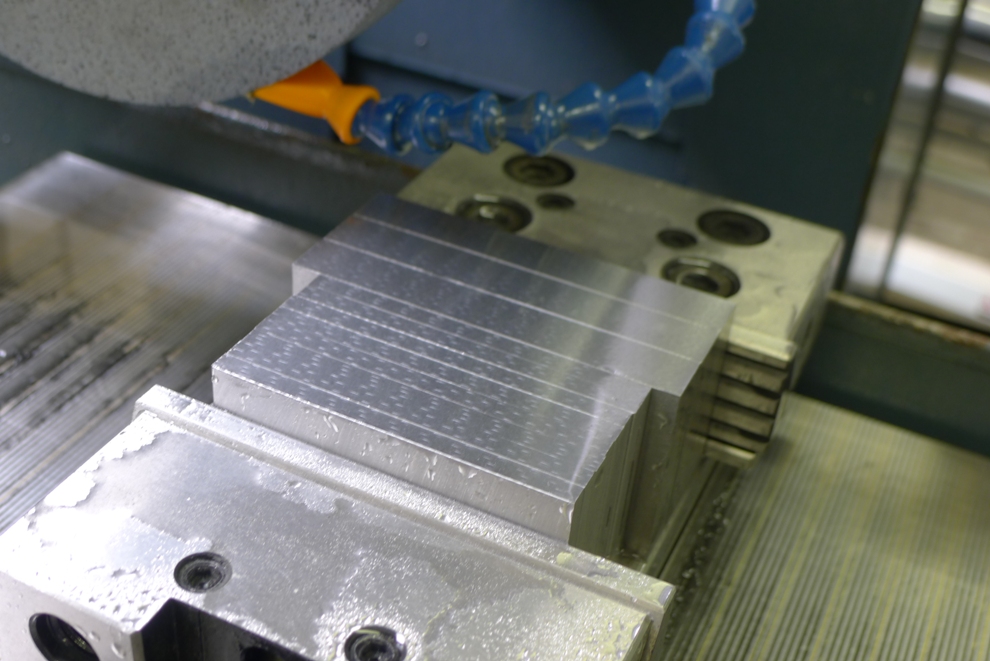
For some reason I have never looked forward to doing this stage of the work in stainless steel in spite of all the experience I gained with the No 98. With a good plan of attack stainless steel will lend itself to quite a lot of cutting and manipulation. There are some that shake at the knees at the mention of stainless steel. This picture shows the first stage of roughing out for the dovetails and in the following picture it shows the milling in the final stage with a forming tool. Note that the bottoms having the compound dovetail so they are made in mirrored pairs to simplify things.


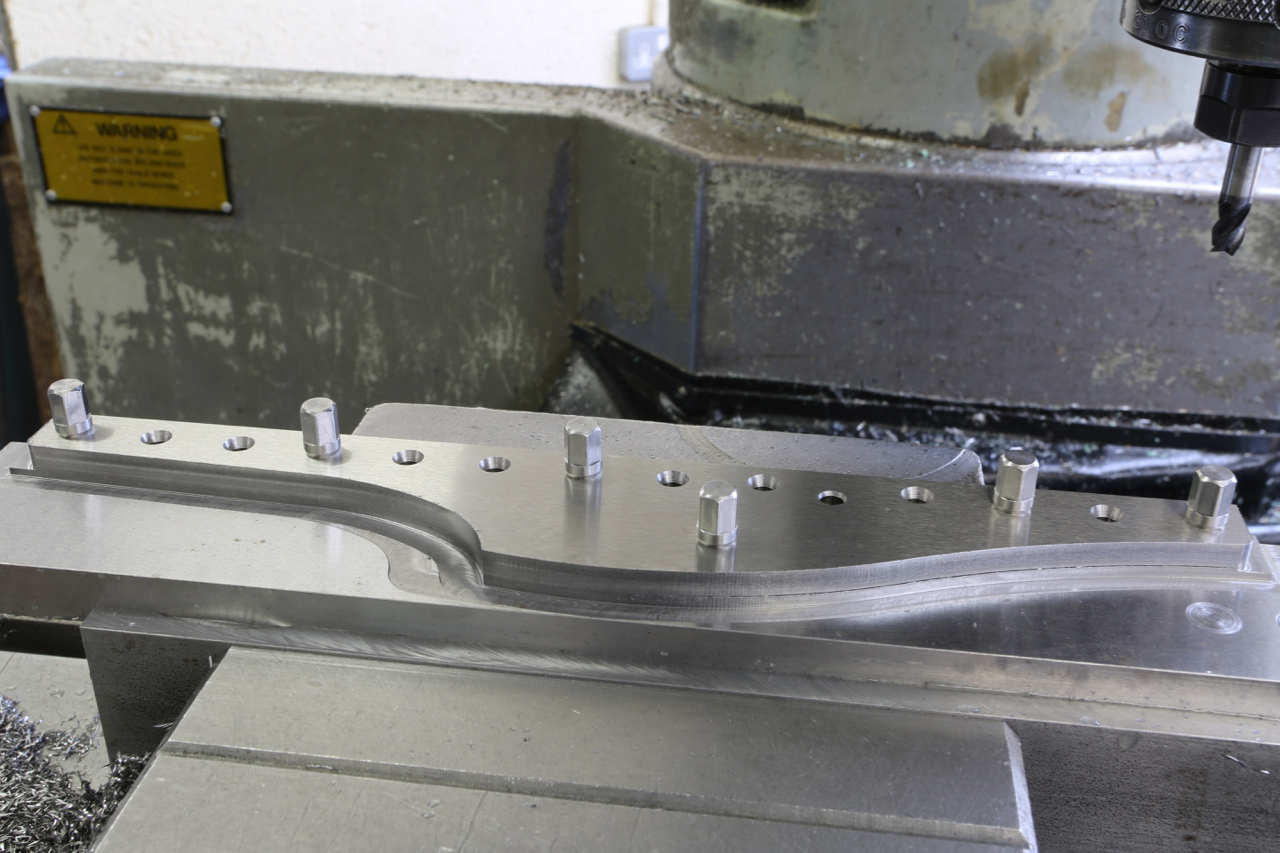
Dovetails finished with all the mess cleaned away.


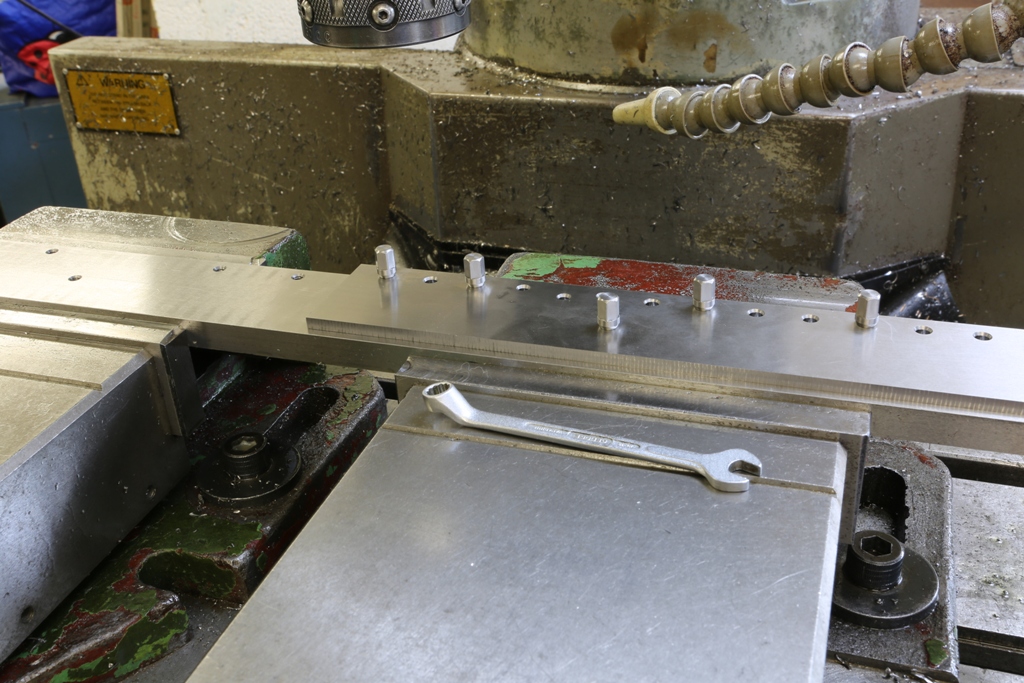
This is another element that I have introduced to dovetailing in metal. As you can see is rebating the top sides of the dovetails, which lends more support to the plane sides. This makes a considerable structural upgrade.


Putting the bottoms aside for the moment I now need to work on the lever caps.
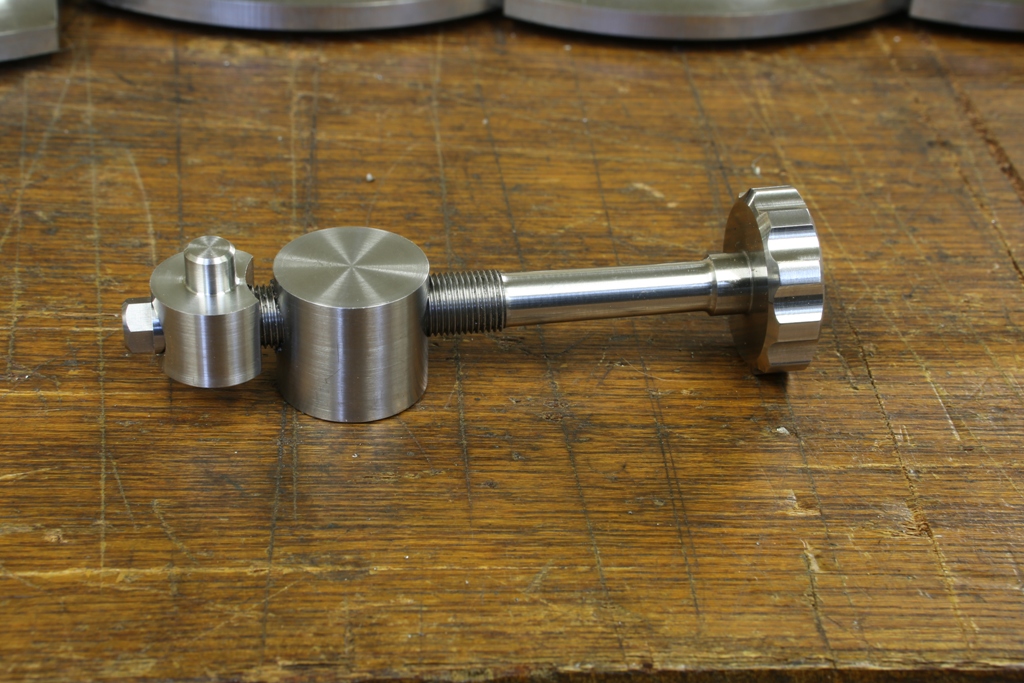
Picture shows the lever caps being prepared again in a similar way as you would with wood by planing faces and edges. Here the manual mill comes into its own.


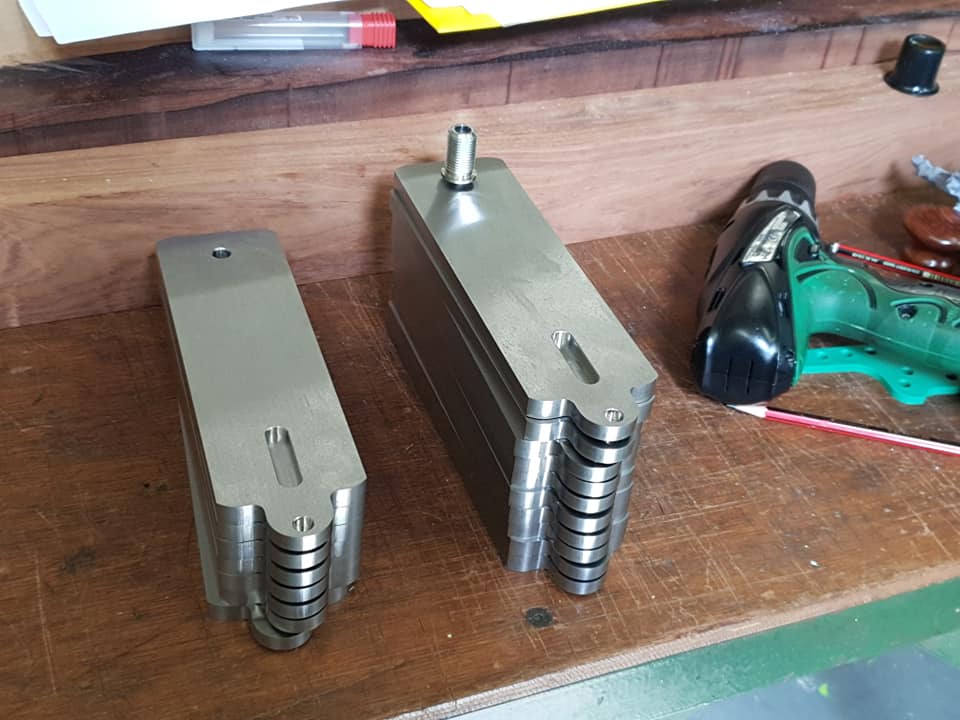
You will have noticed that I produce most of the form whilst it is in a bar section. When finished each bar cuts into several items. As there is a considerable amount of setting up with this kind of work it is prudent to make a bit of stock.
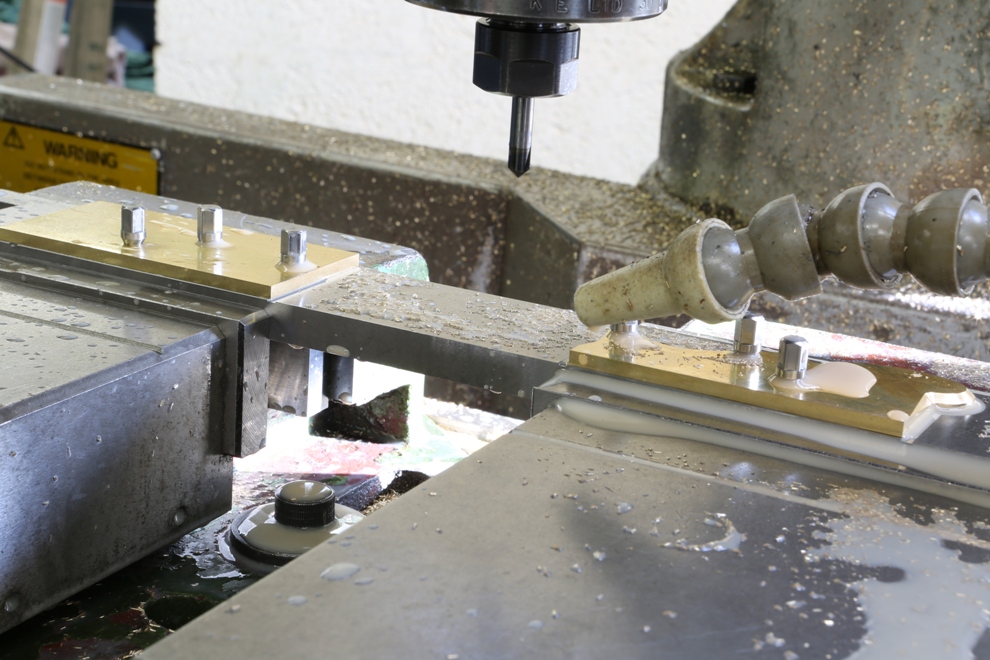
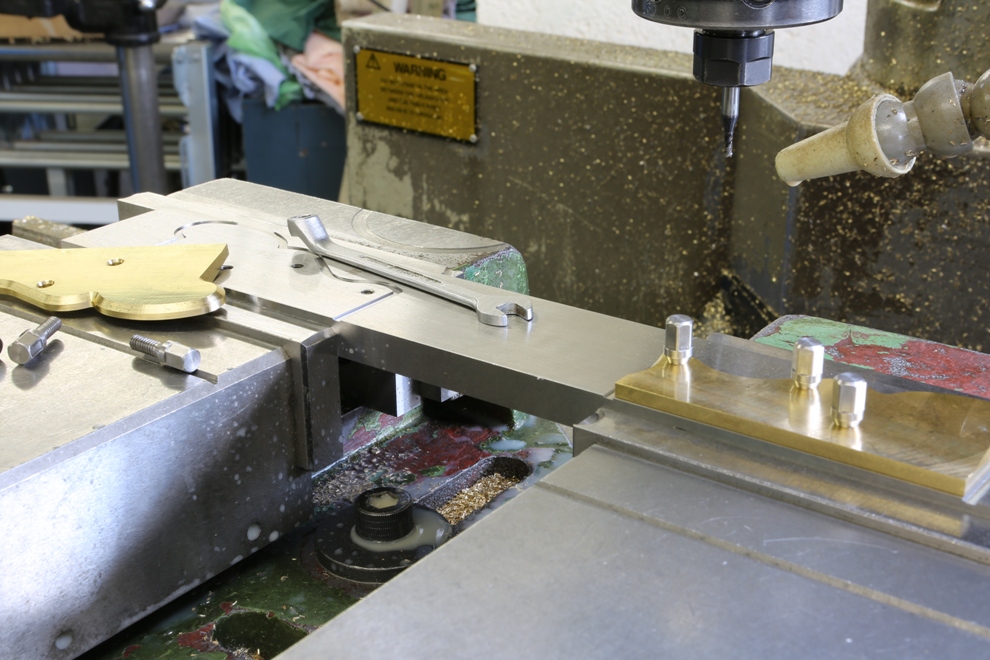
Here I am radiusing the front edge of the lever cap after routing the step.


The captive recess completed with a bull nose cutter.


How nice it would be to have a shelf filled with bars like this.


Before I start cutting this bar up into individual lever caps I like to face the end up before each cut. A nice piece of cocobolo makes a good protective clamp on the front edge.


After each visit to the milling machine to end face I go to my pre-set saw (with an improvised stop and protective packing) to cut the lever caps off to the appropriate size. By pre-facing the end before each cut I am able to keep the cutting wastage down to very fine limits. This means that I can get that extra one out of the bar.


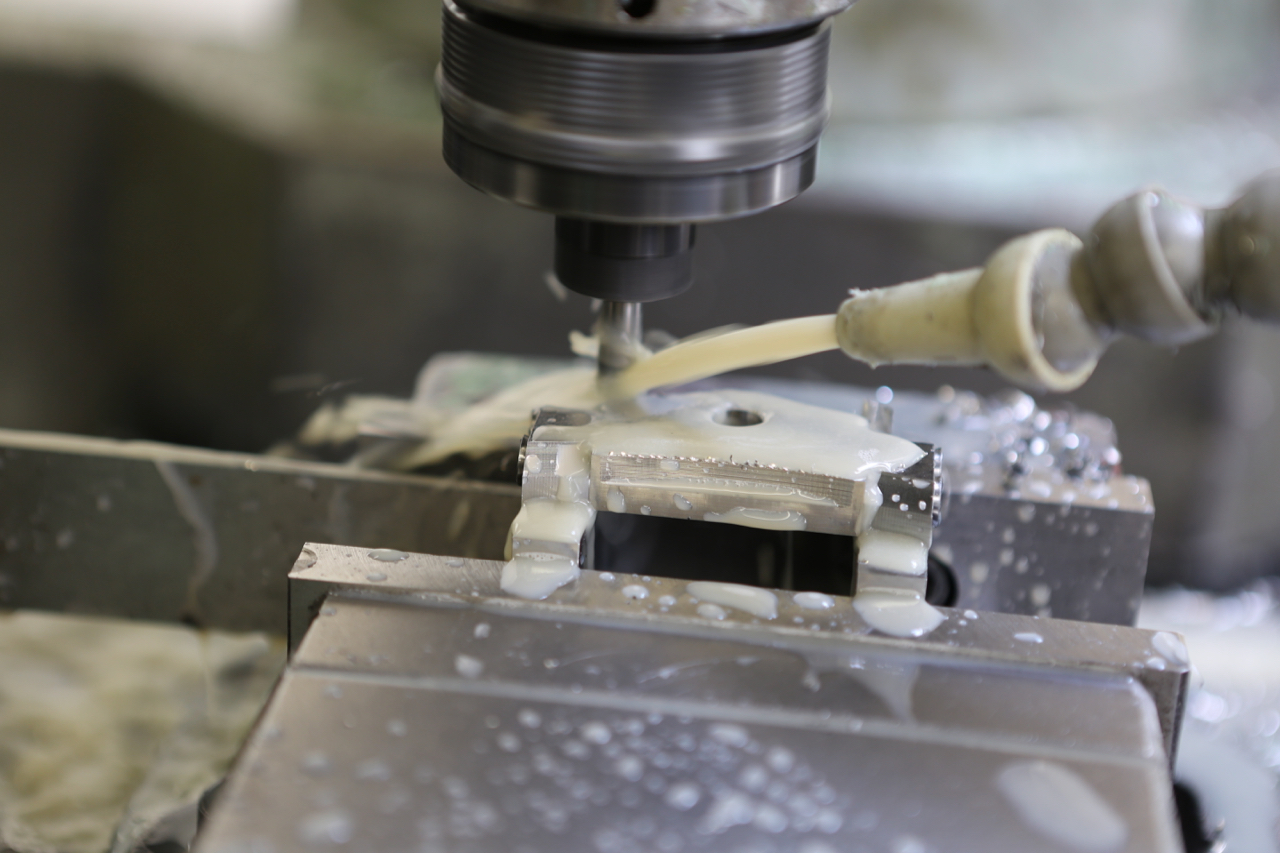
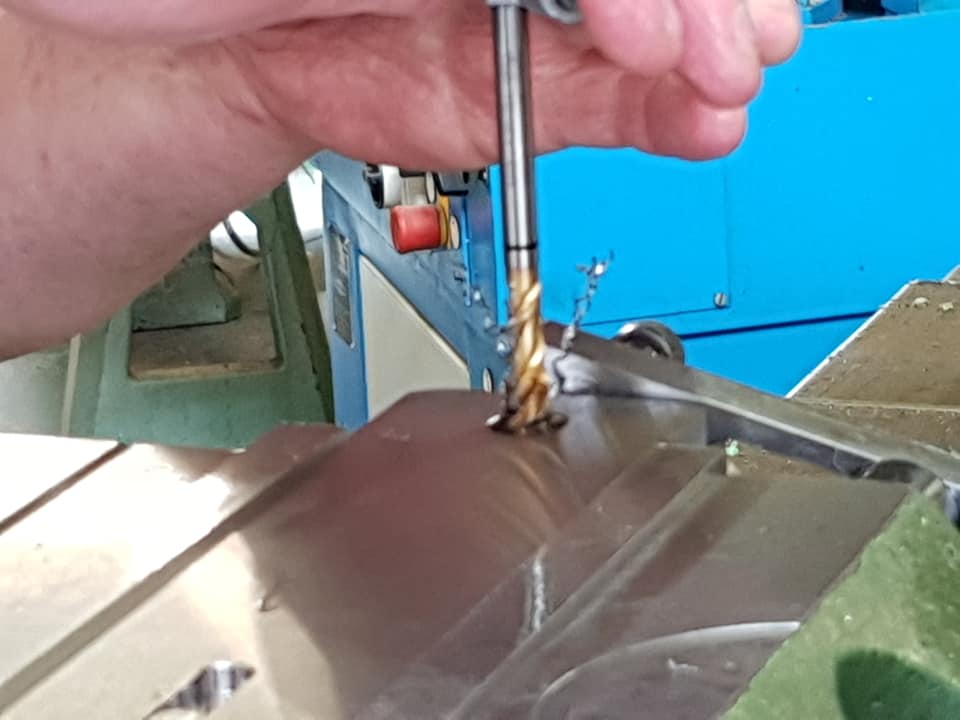
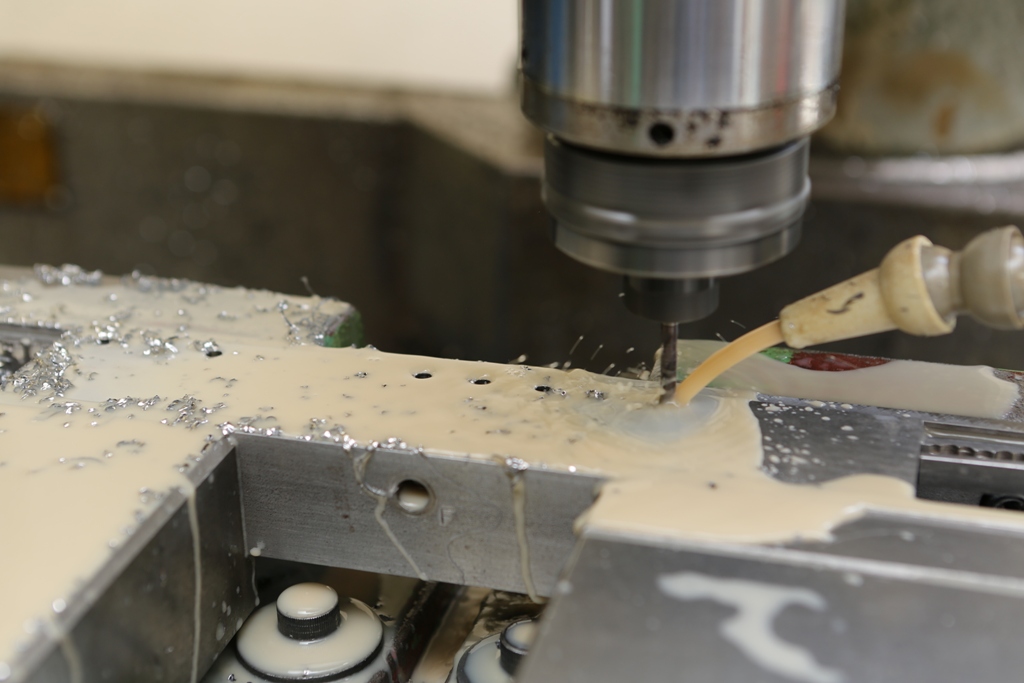
Now these items are looking like lever caps and both sides are trued up, I can set up for the boring of the thumb screw hole with the manual mill. This picture shows the spindle speed at around 1700 rpm.


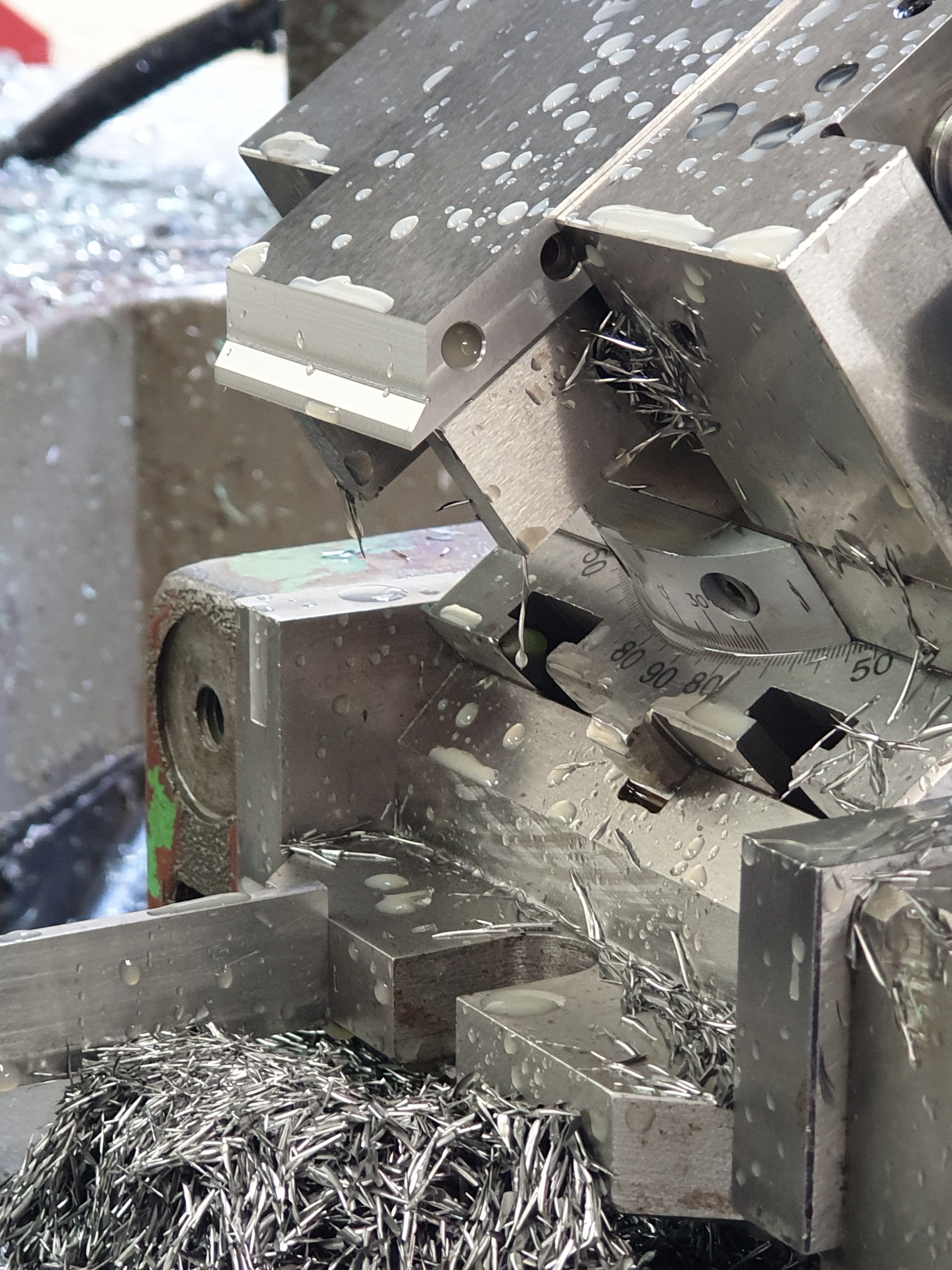
Just taking the picture with a flash it does a good job of freezing this operation which wouldn’t normally be seen as the swarf flies round too fast.


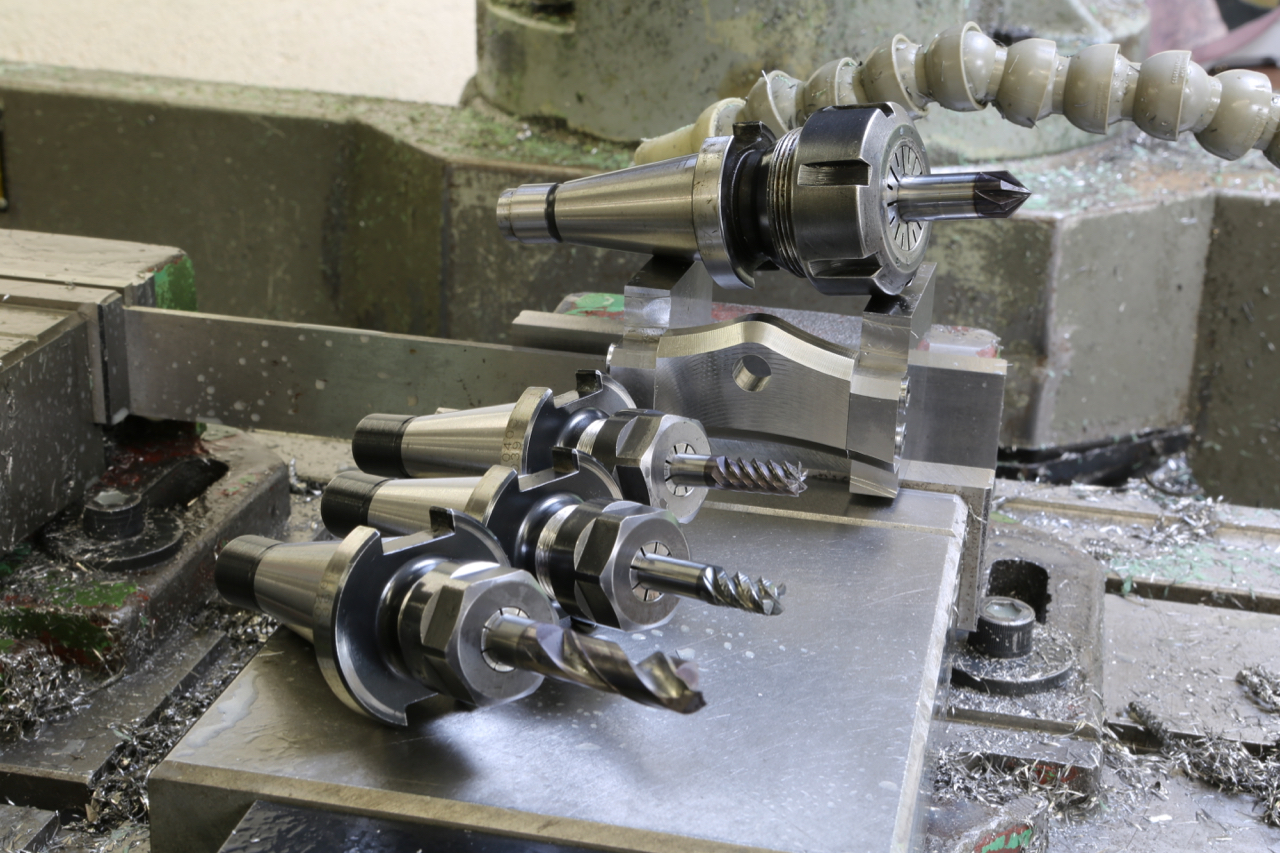
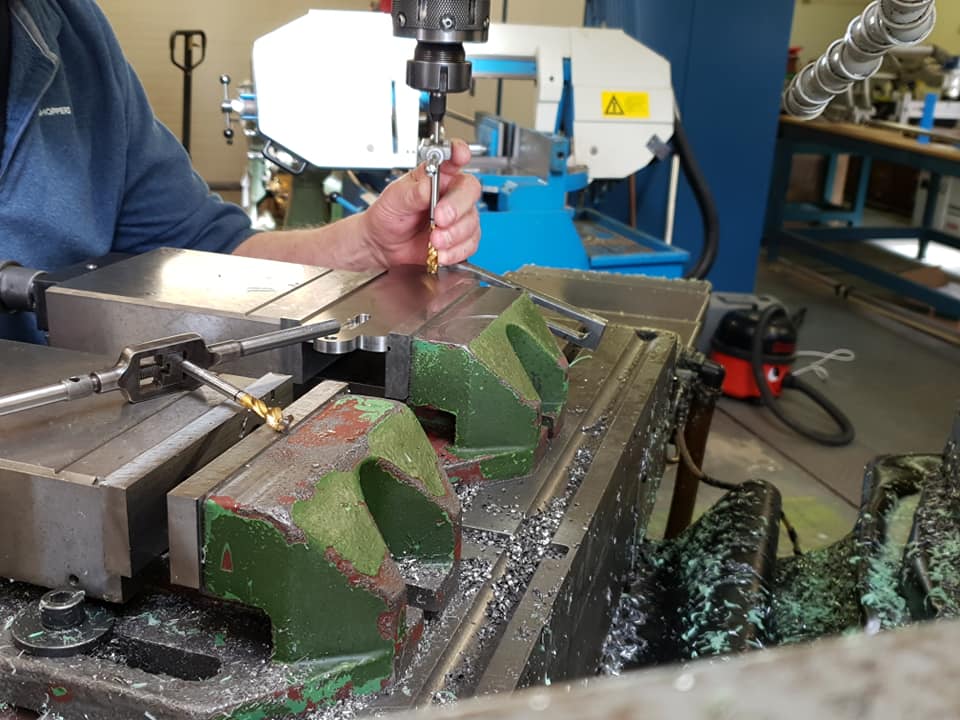
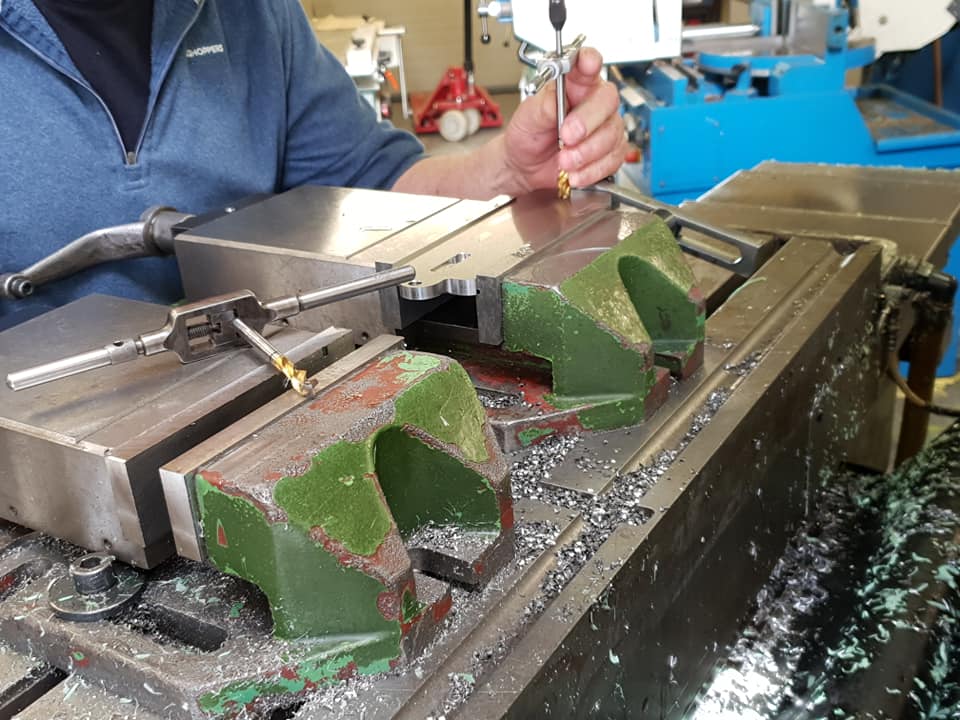
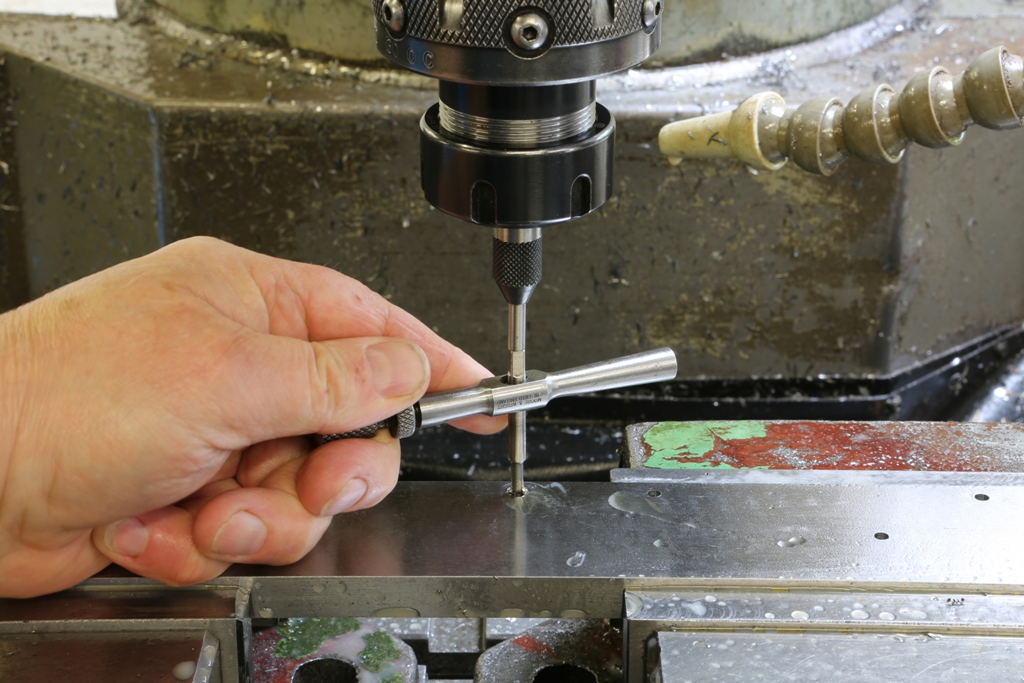
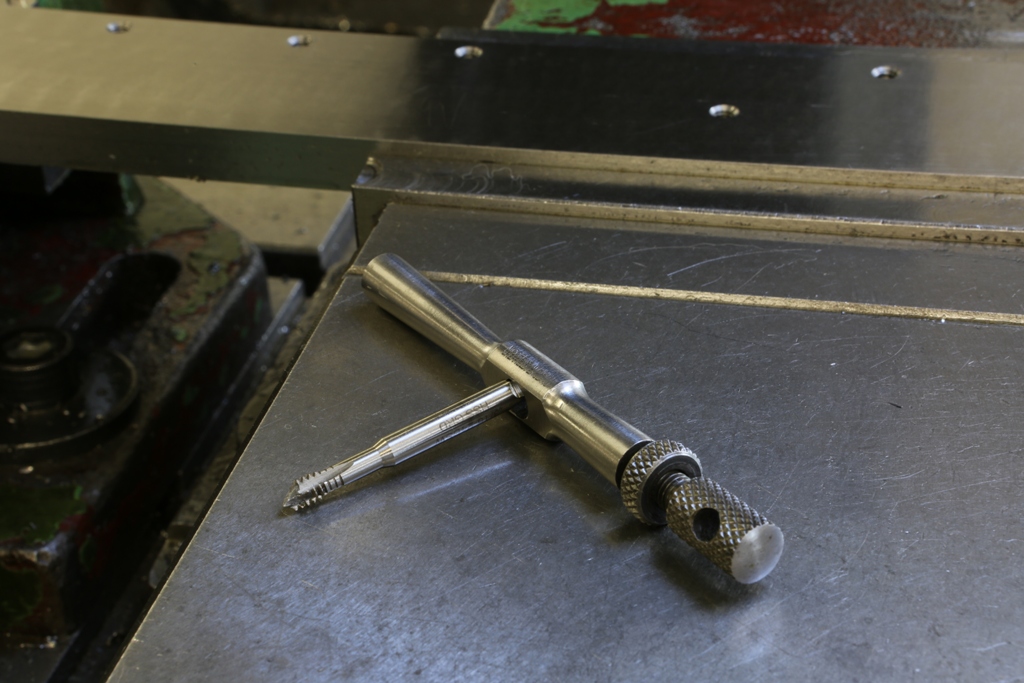
With all the boring complete and out the way I make a tool change. With the same stops and work holding and only a change of spindle speed the lever caps are now tapped.


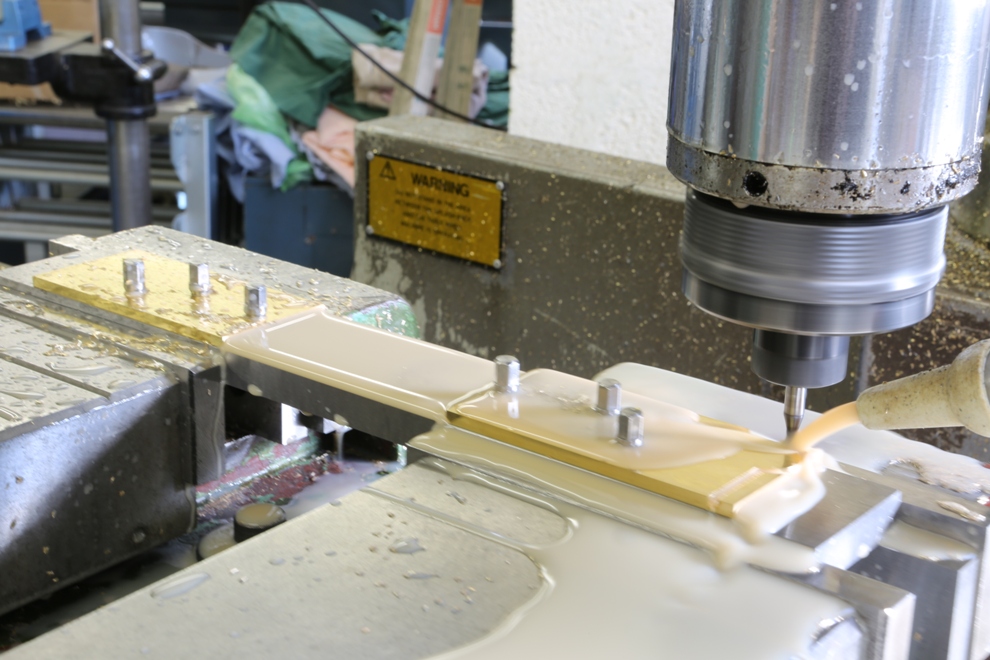
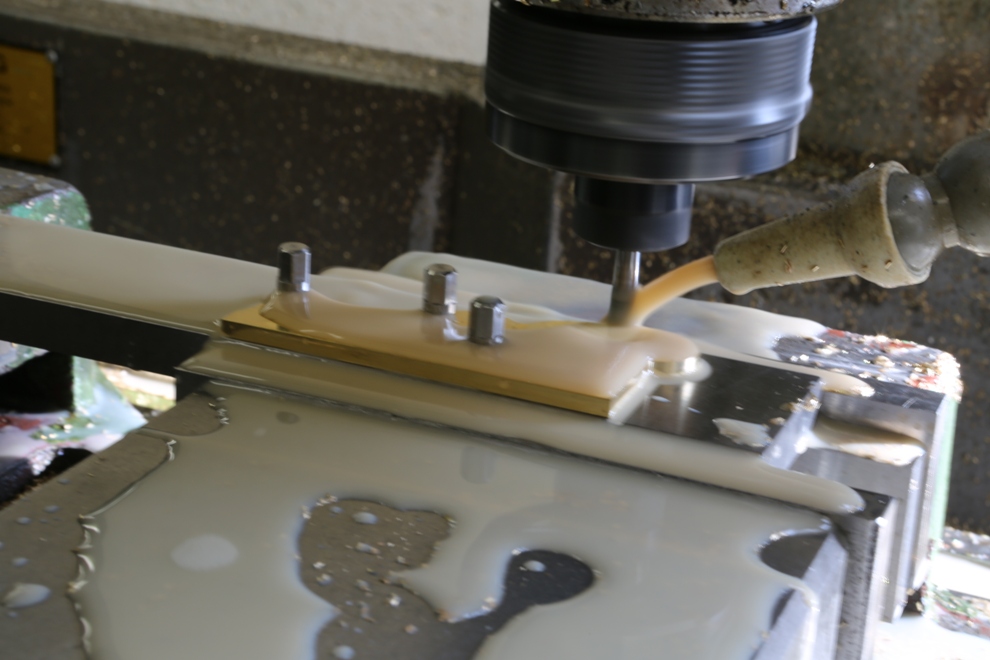
On to the CNC milling machine (and more setting up and programming) I start applying an interesting form on the top end of the lever cap around the thumb screw area. One of the nice things of working with brass (naval brass CZ112) is not having to run coolant.


Showing the first cut after the swarf is blown away.


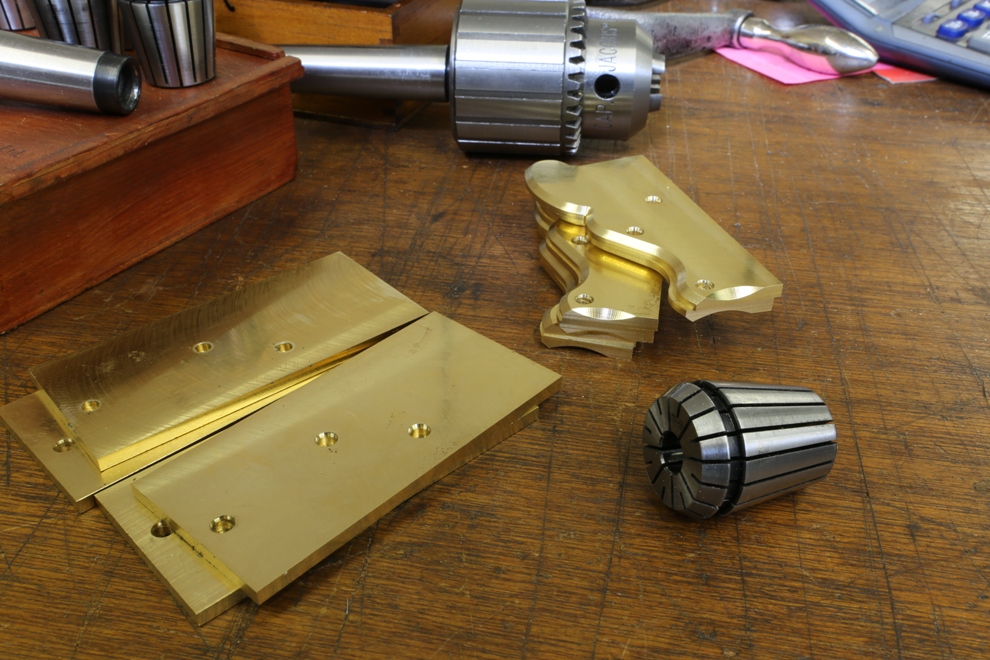
Here showing different stages of the work. Also showing a simple work holding fixture.

August 2, 2011

Window to my workshop 52

A6 Part 2

*************
 

All of the woodworking has its edges squared up on the milling machine as I have a bit more confidence in this machine than I do a planer.


A pair of infill sides being drilled for riveting spacers. At this stage all edges are trued up


This is the infill side with the spacers pressed through the handle testing for fit. The two sides have yet to be separated.

(more…)

July 31, 2011

Window to my workshop 51

The last batch of A6 planes part 1

After receiving a commission for an A6 smoother I decided to make a batch of six. The A6 is probably the most time consuming of the infill planes (well perhaps the A7 is worse!). When using the designation A6 one should realise that my A6 is not to be compared with the Norris or any other plane of this type – it is made to a higher precision and has some innovations not seen in the original. This standard is beyond the scope of those without a tool room; I am not aware of any comparison. I work from a reasonably equipped tool room; not a production line. All work is done in house with the exception of heat treatment for the blades.

Although this model has been blogged before I am running it through again as this A6 is just that little bit more special. I always try to make the current plane better than the preceding one. Also these will be the very last Holtey A6 planes. For all my innovations and upgrades my work is veiled by the Norris history and I feel it is time to move on.

************************

The first part of starting the plane is to get the timber chosen and prepared so giving the wood some time to settle whilst making a start on the metal work.
 

Here is a stunning piece of Cocobolo (Dalbergia Retusa) which was cut from a very nice log that I acquired from Timber Line a couple of years ago – thanks to a friend who spotted it on a visit there. This is the basic roughing out for the infill components.


With the wood put aside to rest, a good starting point is the blades as they need to be sent away for the heat treatment. This shows the milling of the faceted end and slot.
(more…)

February 13, 2011

Window to my workshop 50

Some pictures of the completed No 982 panel planes (14 1/2″).  I made a limited edition of 8 of these planes, a few were made with the brass cones. 


(more…)

December 26, 2010

Window to my workshop 48


Now that the No 982 lever caps are 99% complete I shall move on.


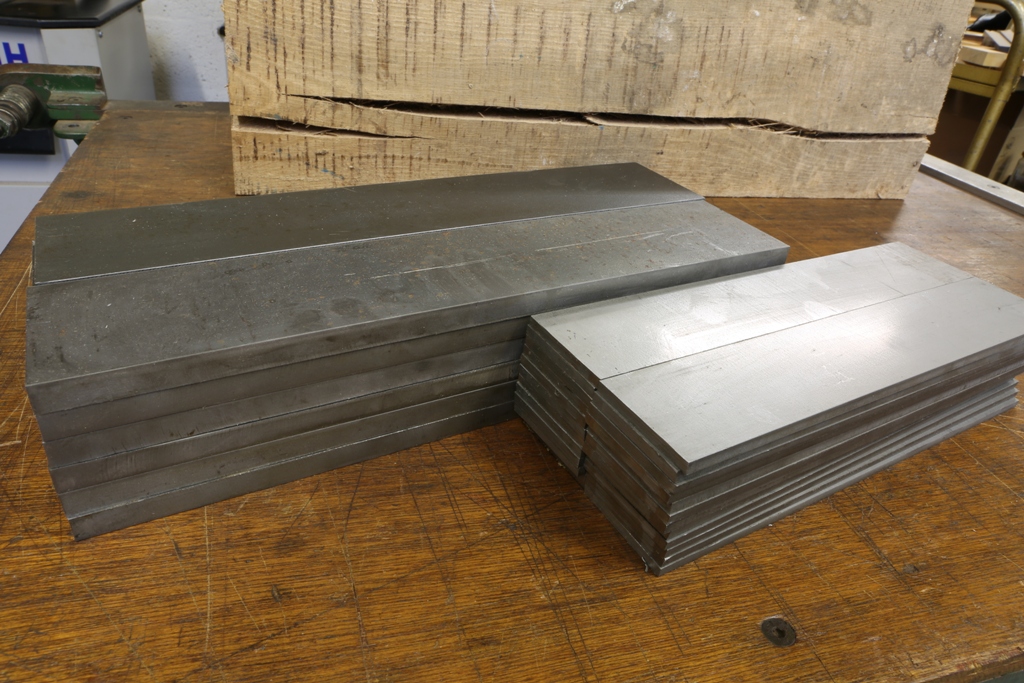
The beginning.  Cutting up bottoms and sides from hot rolled black mild steel.  This is a very malleable material with no stresses.
(more…)

November 21, 2010

Window to my workshop 47

After the completion of the No 982 smoothing planes it was not long before I was pressed into making a larger version in the form of a panel plane.  Because of the enormity of work on this plane I have decided to make only 8 for this batch. 

 For the benefit of those who have bought this plane I would like to blog the making.  Hopefully it will show up some areas I did not cover on the smoothing plane blog.

 You will notice that I do change my techniques from time to time.

 I will start this blog by documenting the work on the lever cap.  I would like to emphasise the work that goes into this one component.  Though I have used castings in the past for my lever caps I feel more in control by making them from a solid bar and I produce a far better product.  I  now understand why some of the Rolls Royce cameras bodies are made from solid billets.

Starting with a bar of naval brass I go round and machine all the sides true, just like you would with a piece of wood.

If this was a piece of wood the next stage would be to machine a form i.e. either with a spindle or a router.  In the case of metals I have to concentrate more on work holding so this picture shows me setting up three vices in a line.  The bars I am working are 18 inches long and cut 8 lever caps each.
(more…)

October 18, 2010

Window to my workshop 46

As I am currently working on a small batch of No 982 14 1/2″ panel planes I thought I would show this picture of all the component parts of the smoother.   Most of the parts are going to be the same.

This picture excludes taper pins, handle, lever cap, screw and adjuster.

There will be more pictures as I work through the project.

Window to my workshop 49

I have just found this blog entry for No 982 smoother that I forgot to finish.  As it is very similar to the blog entry for the No 982  panel plane 14 1/2″  I have already done this week I thought I would just publish the pictures with no comments.

(more…)

September 28, 2010

Window to my workshop 45

Filed under: Specials, Window to my workshop — Tags: , — admin @ 3:18 pm

For some time I have been looking for a simple copying lathe just to turn the buns on my No 98 series planes.  I have not been able to find anything suitable.  So I decided to buy a standard lathe and purchased a second hand Wadkin BZL woodturning lathe.  I then tried to find a copying attachment, which just led to more dead ends. 

 As it happened my brother made one of his visits from France and he is always looking for a little job in my workshop.  So it seemed to be a good idea set him with the task of making this tool.

 Until this lathe came along all my wood working was done on my Harrison M250 engineering lathe.  Which is a bit drastic just for turning wood.  Up until I got this lathe all my buns were turned from scratch with just a template reference, so I was getting desperate for a system of repeatability.

 Harrison M250 lathe
(more…)

September 20, 2010

Window to my workshop 44


A few more pictures to conclude the subject of polymer.  Feel free to comment on whether it is worth it when you have seen the finished product. 

Hopefully this plane will be on exhibition at the WIA conference next month with The Best Things.

As you can see the polymer is worked in the same way as wood and the shaping is all done by hand.

Another view showing the fixing recess.
(more…)

Older Posts »

Powered by WordPress