From the Workshop

February 6, 2013

Window to my Workshop 66

I thought it about time I wrote some more in my blog. Looking back on my past entries I notice that there are some gaps which I intend filling here.


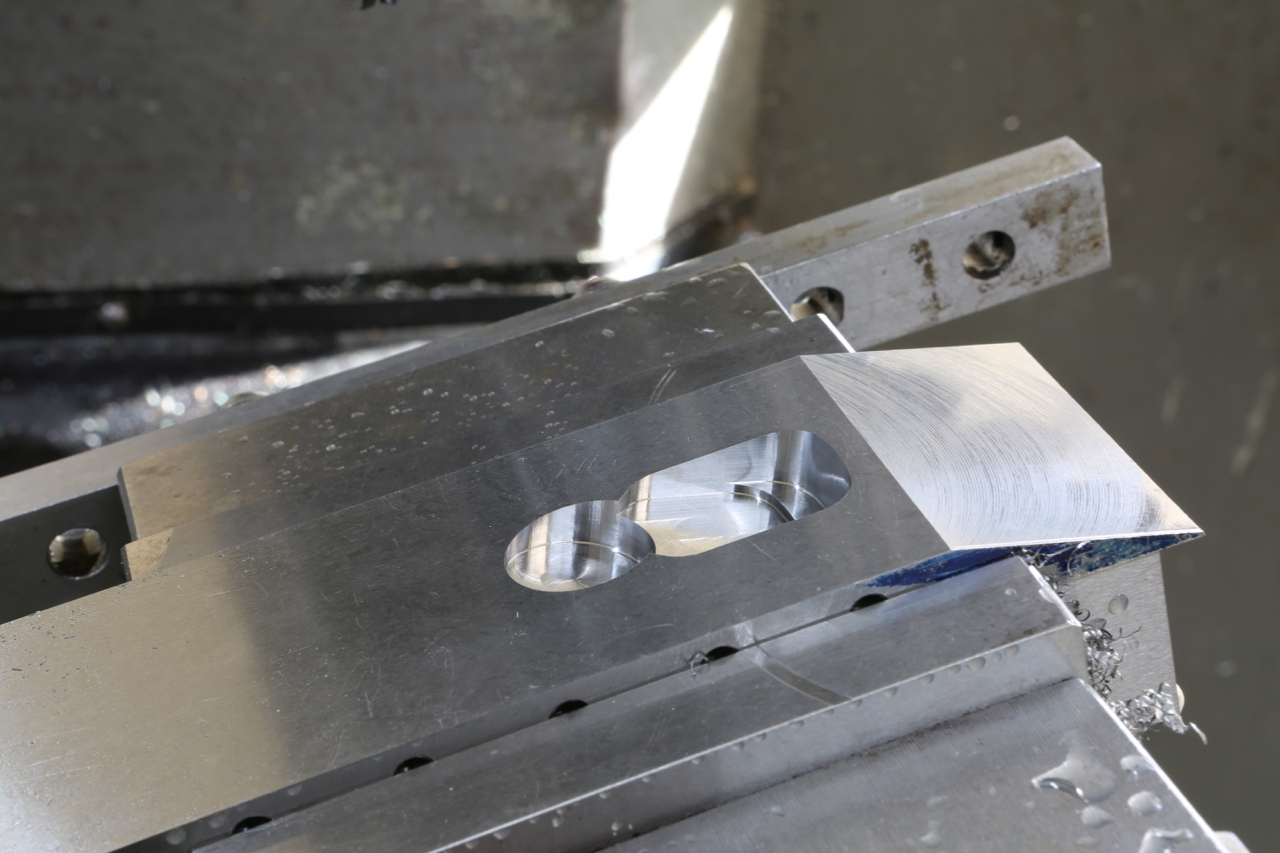
At the beginning of any project the metal is a good place to start (after design and drawings are done of course). In all my classic designs I use mild steel – I have tried it in several different forms; hot rolled (which is very good and has little stress in but comes with a lot of scale to deal with), BMS (which is nice and clean but has a lot of stress in it), sheet metal (which still has a difficult scale to deal with and some stress). Stainless steel would be my favourite choice, but not on the classic type of planes. I therefore choose mild steel as this is a nice ductile material once the stress problems have been dealt with. To relief the stress I have to cut it to manageable sizes and send it off for heat treatment. This picture shows the material in two stages – after heat treatment and some after surface grinding.


As you can see from the picture my grinding machine is a Jones and Shipman 1430. It was made in the ‘60s and it has been reconditioned by Andmar who are more ‘Jones and Shipman’ than the company themselves. It has been the main stay of my workshop since I purchased it 10 years ago as all my work including tool making passes through here. That is every jig and every piece of work holding (as well as plane components). It sets the standard for all my work.


This surface grinder uses a 24” x 12” Eclipse magnetic chuck which needs re-surfacing every 12 months. This can take up the best part of a day. The nice true surface is so good I just had to photograph it (sad isn’t it!).


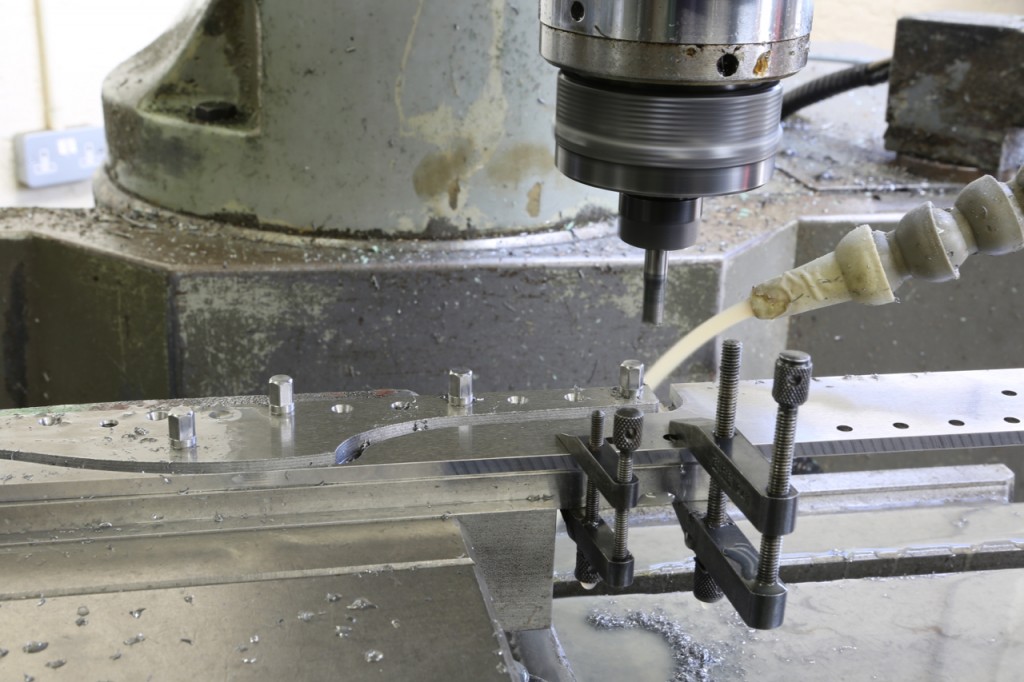
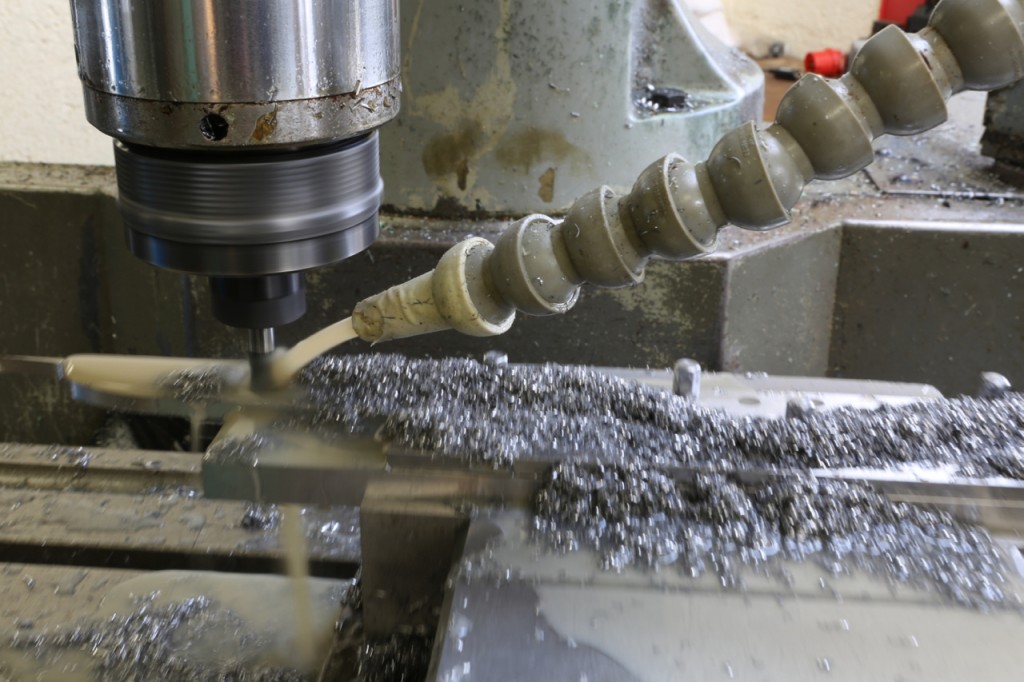
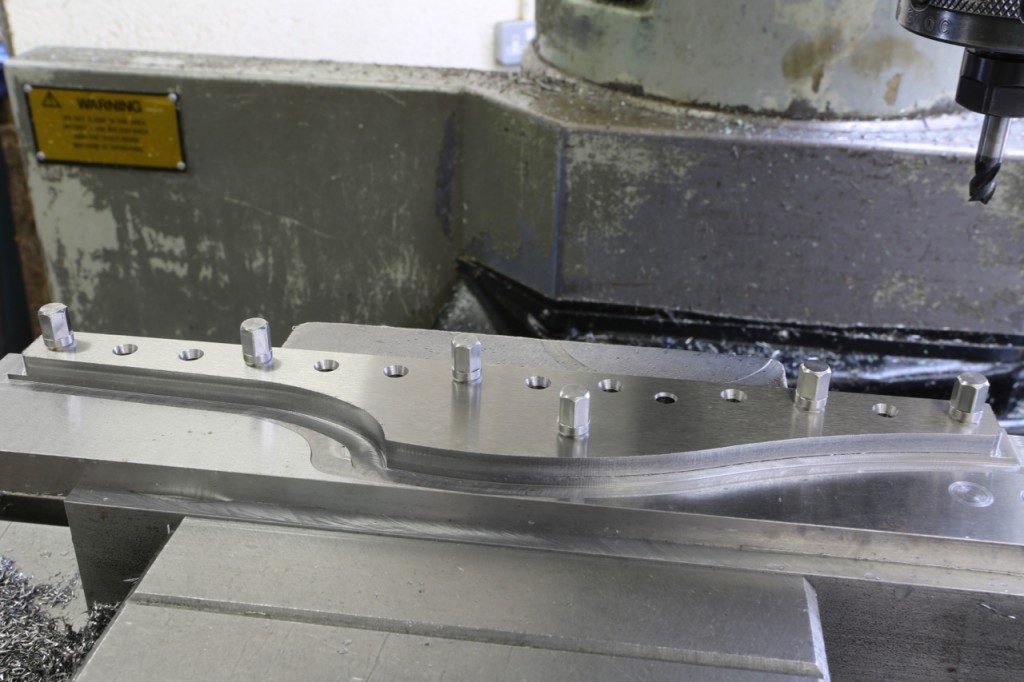
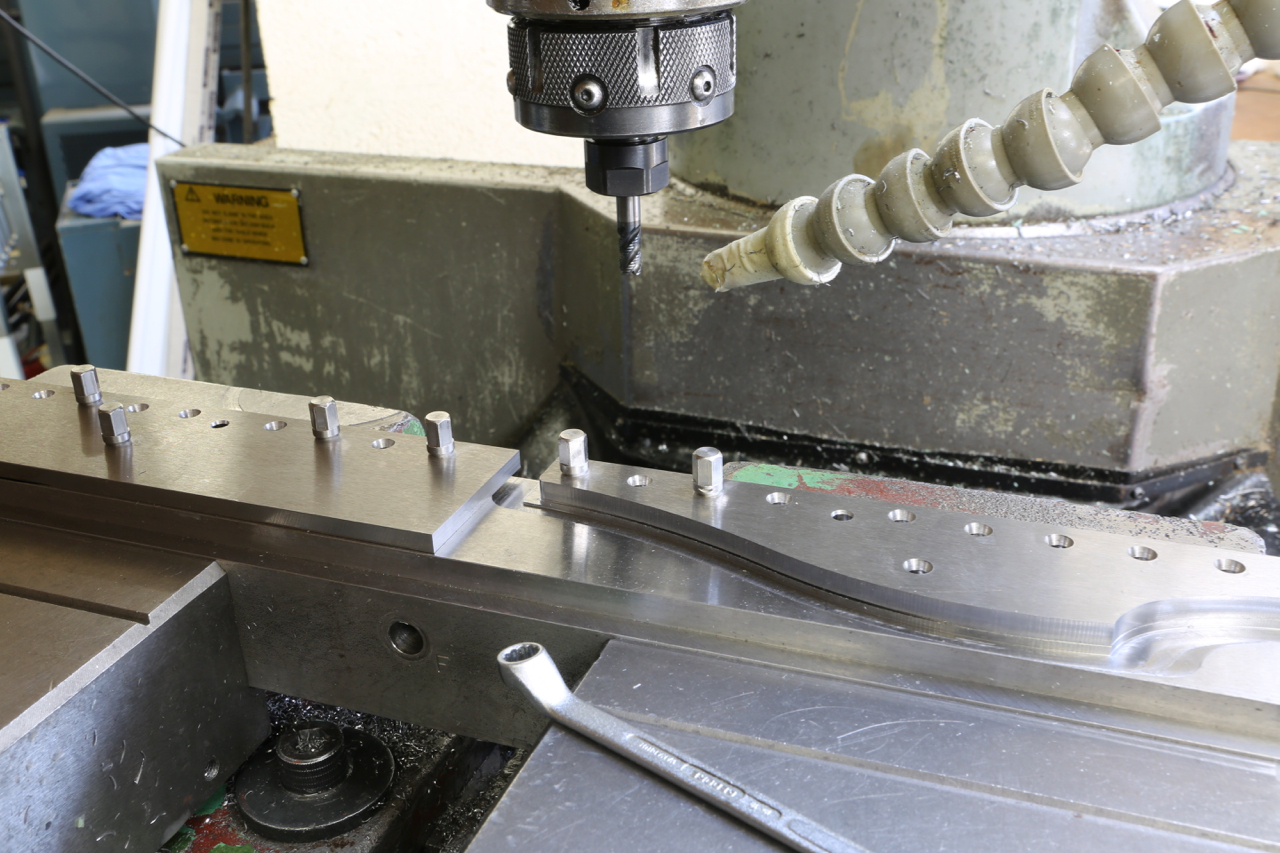
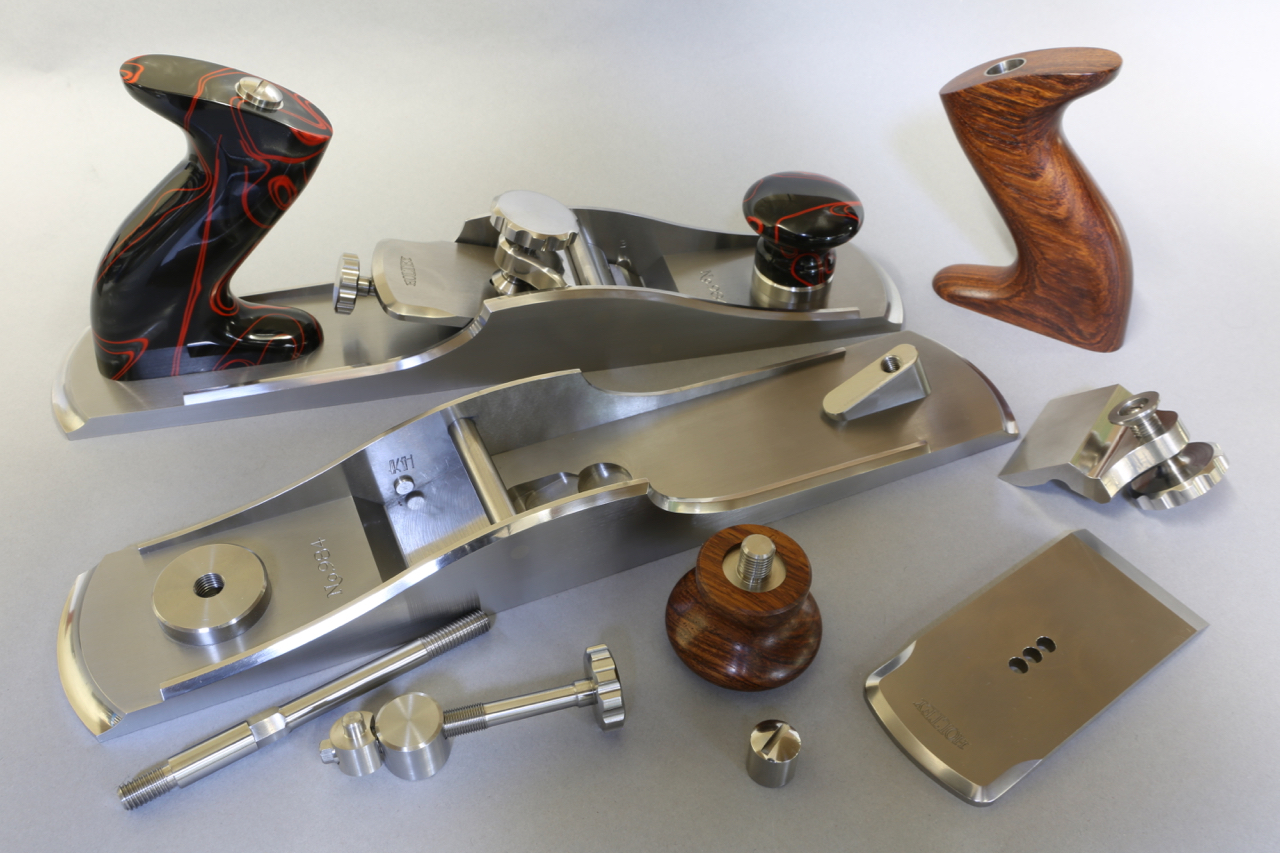
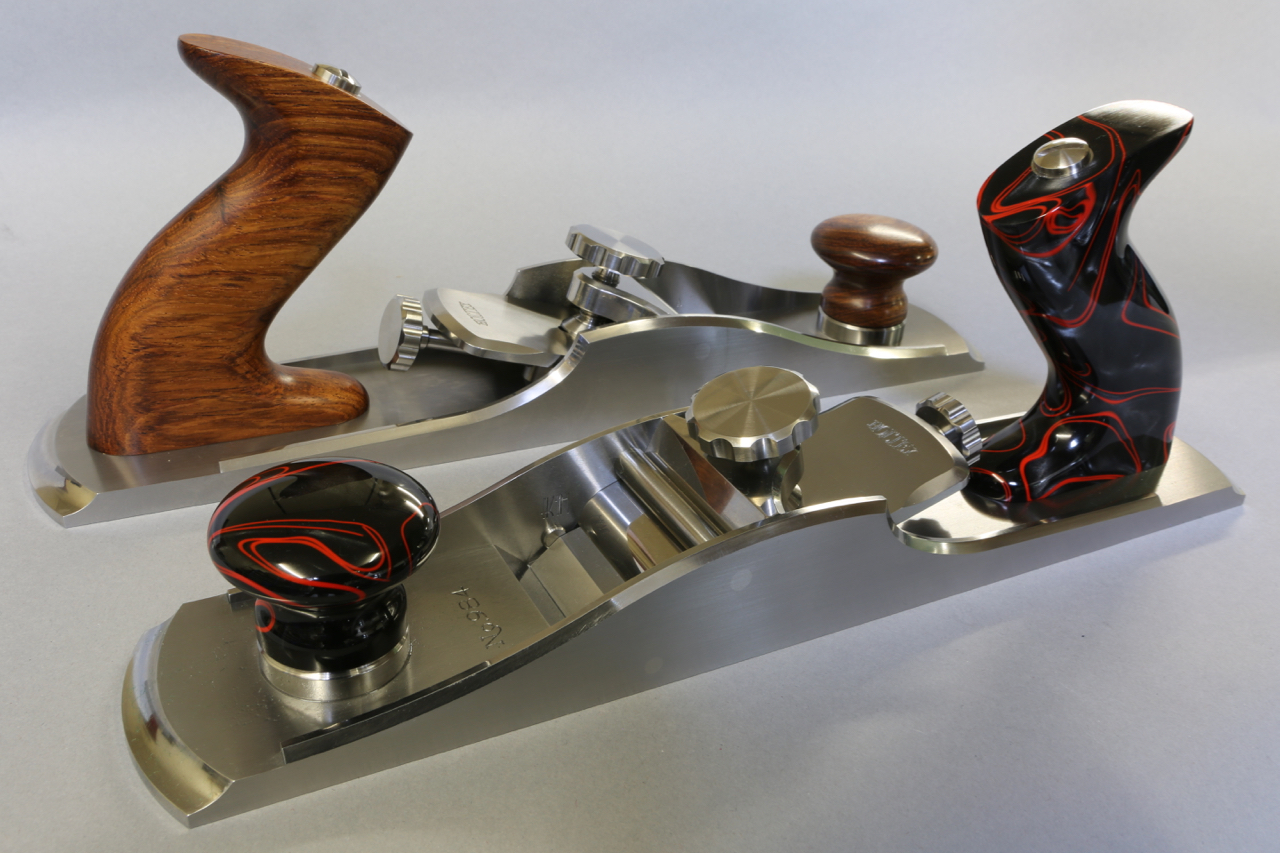
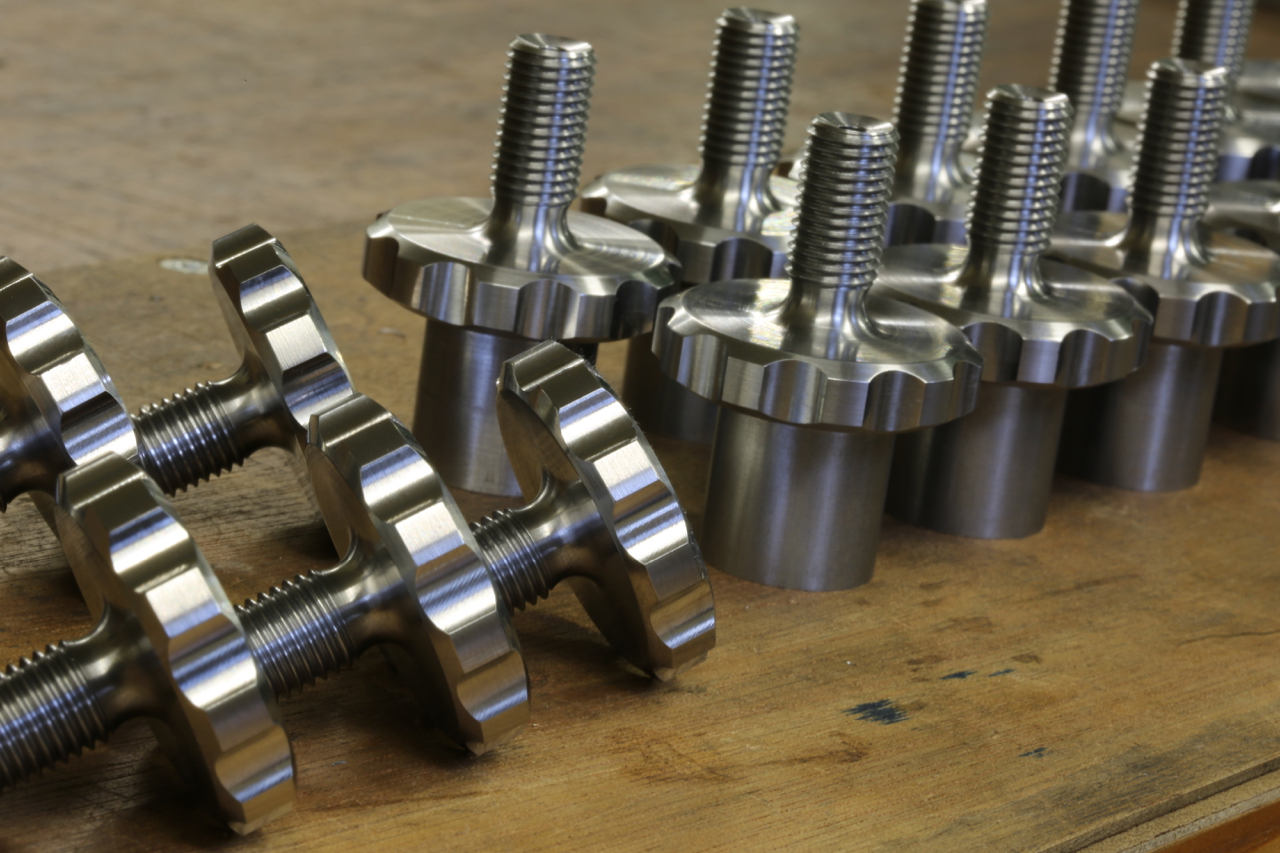
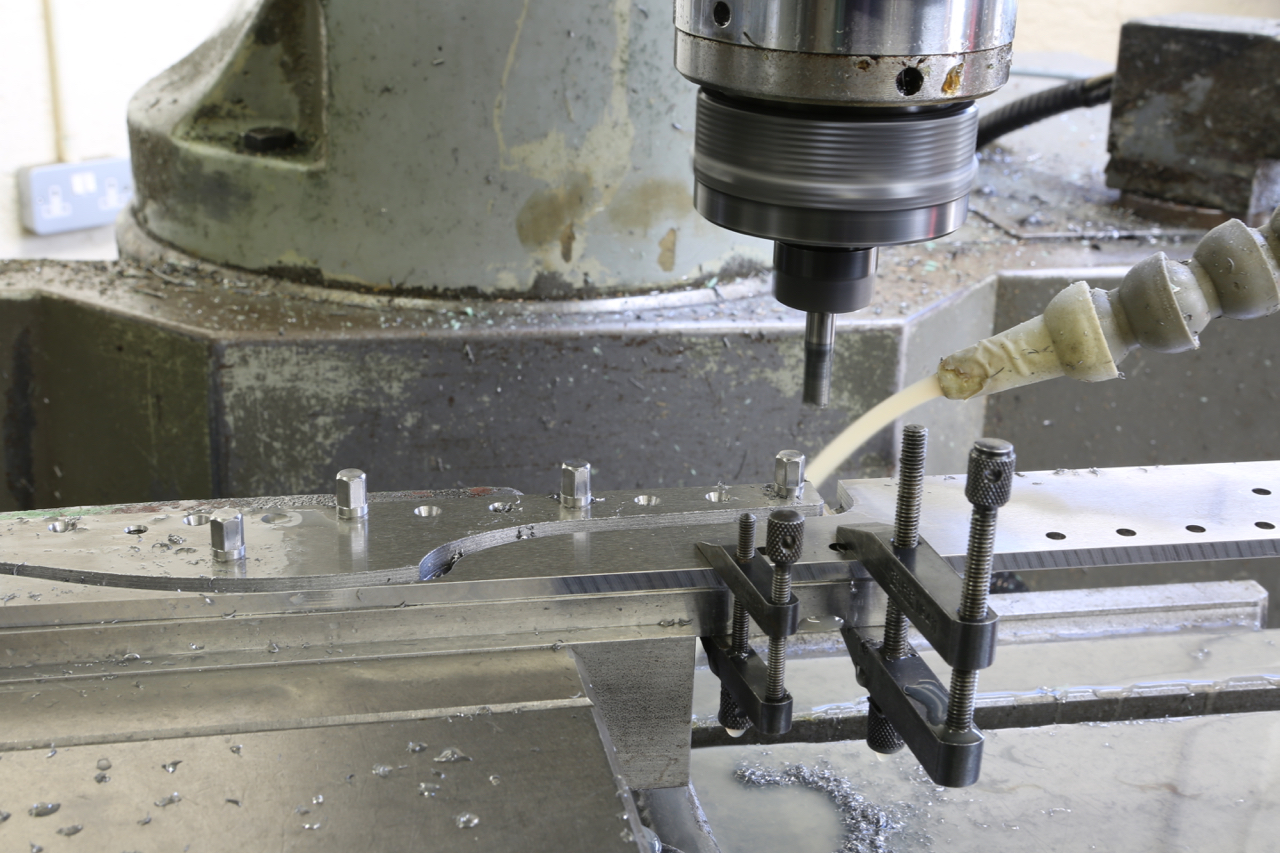
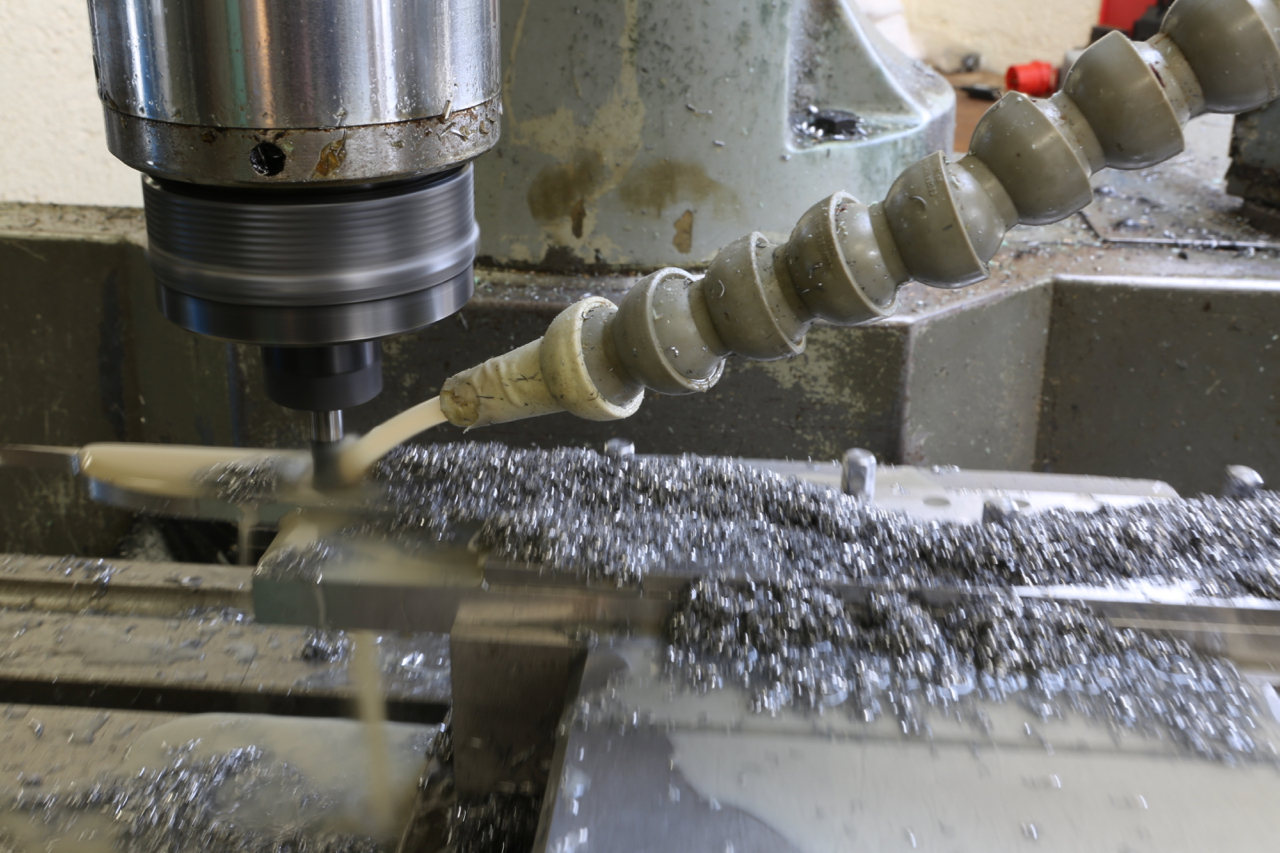
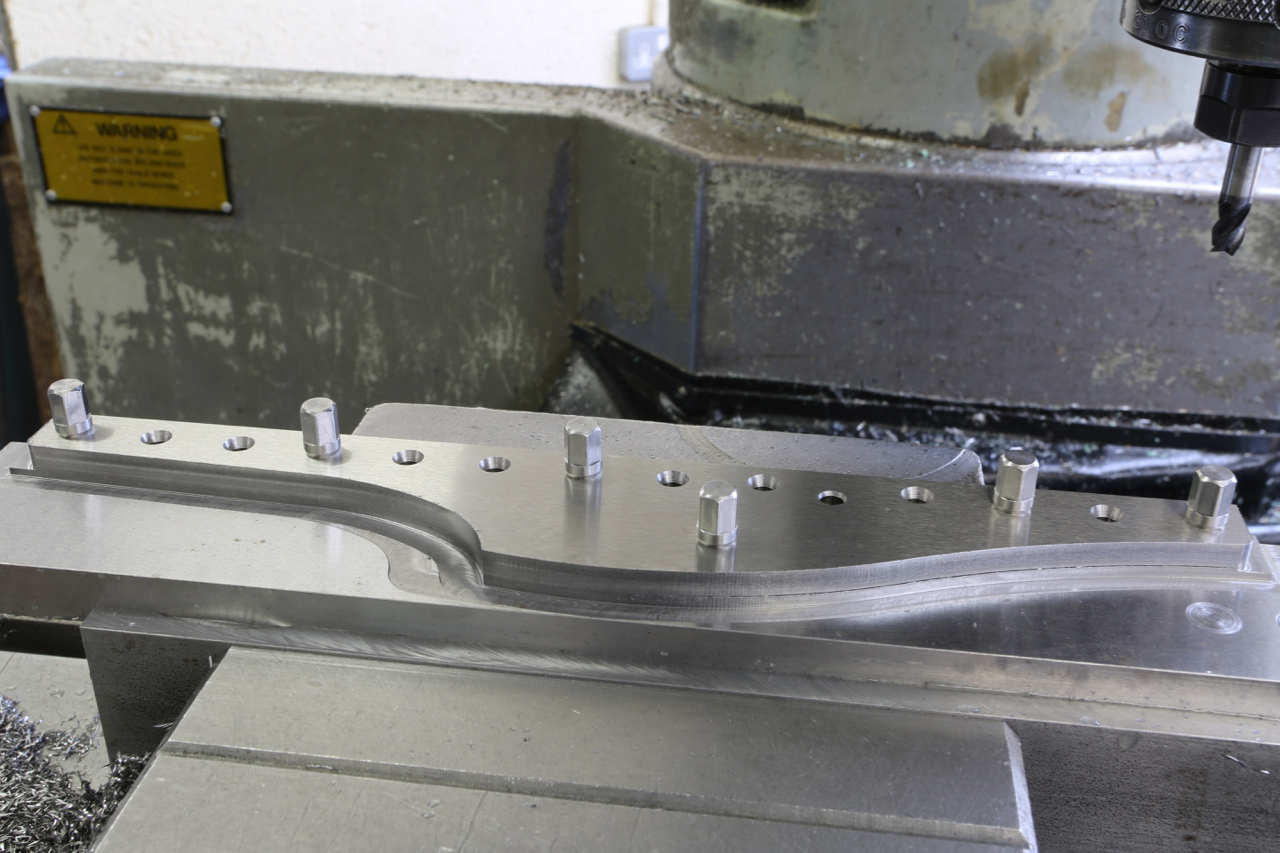
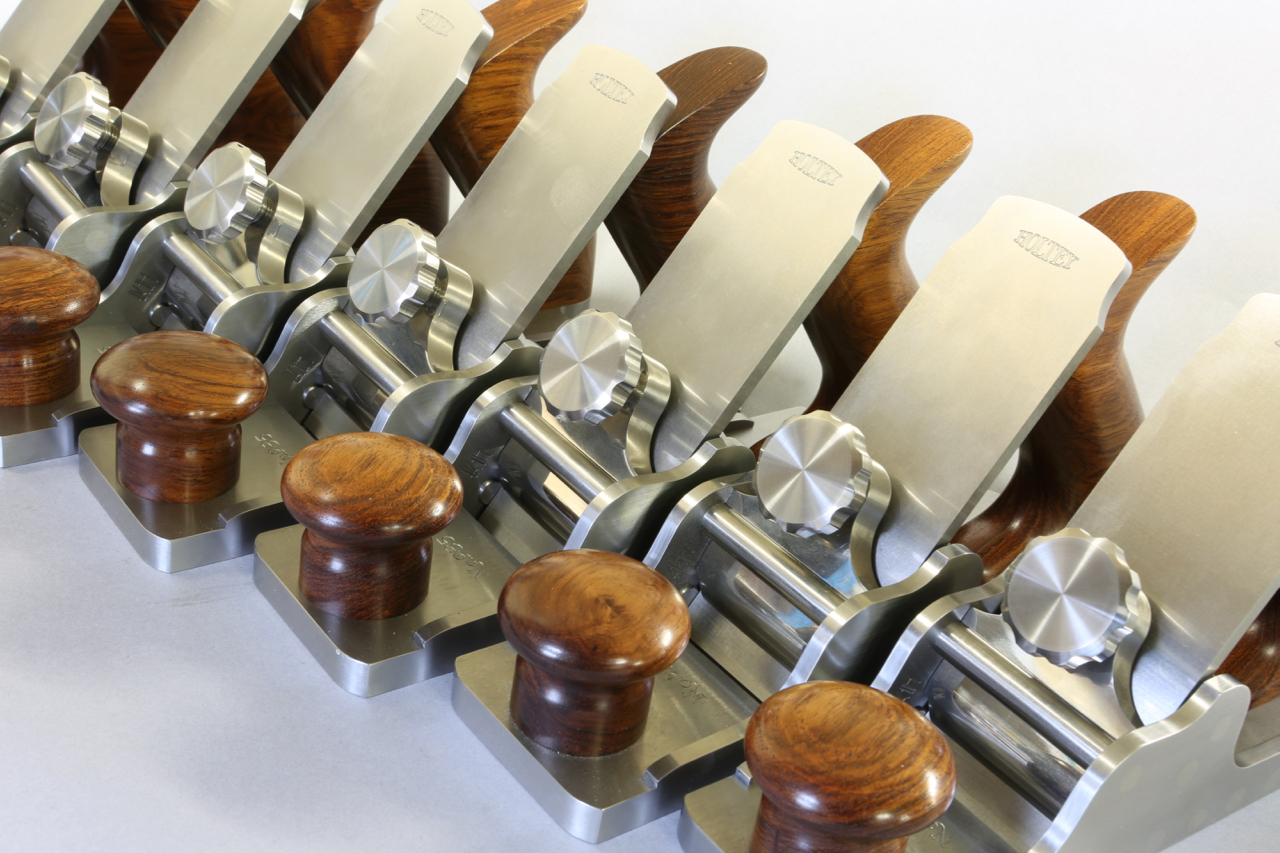
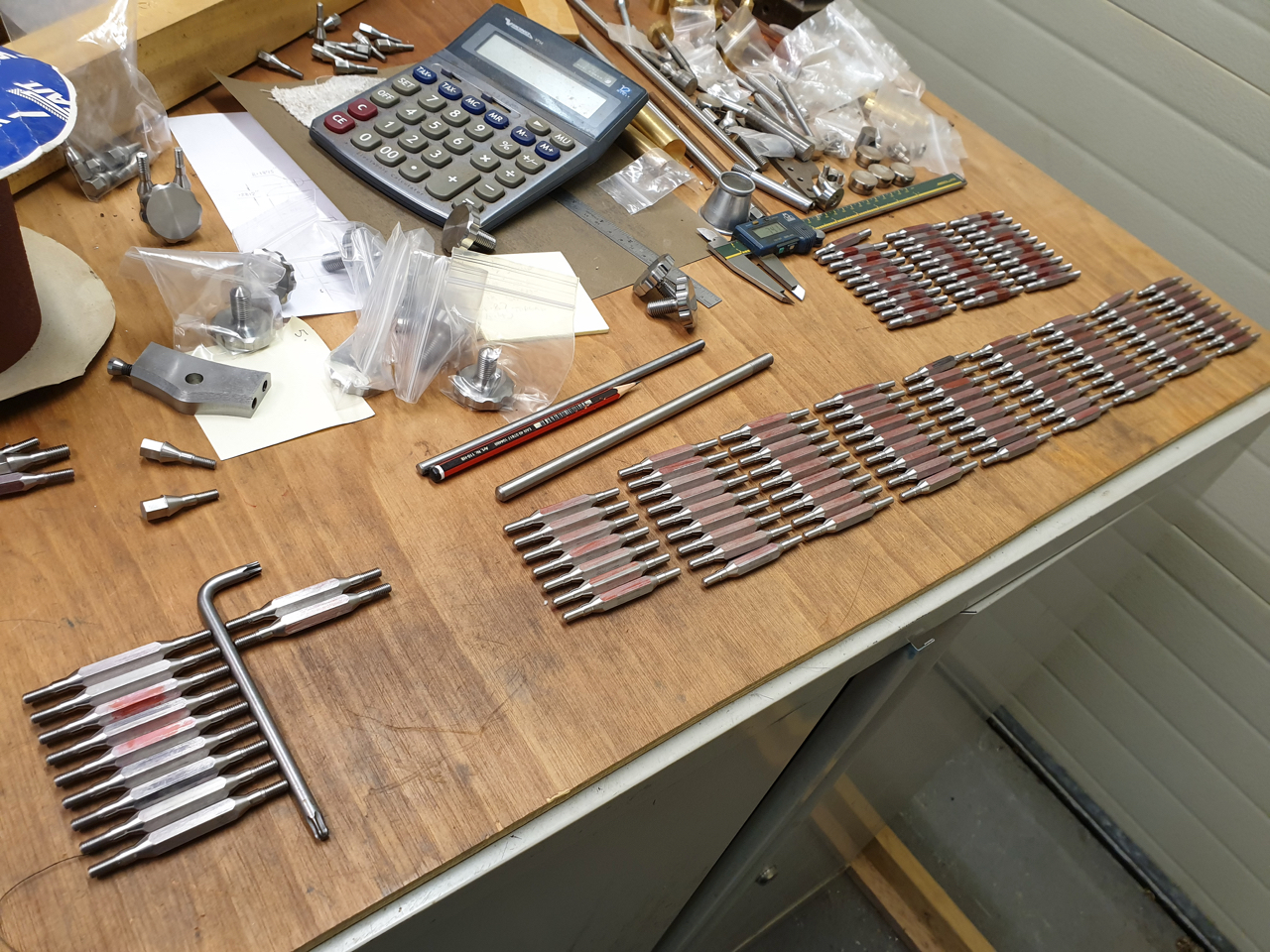
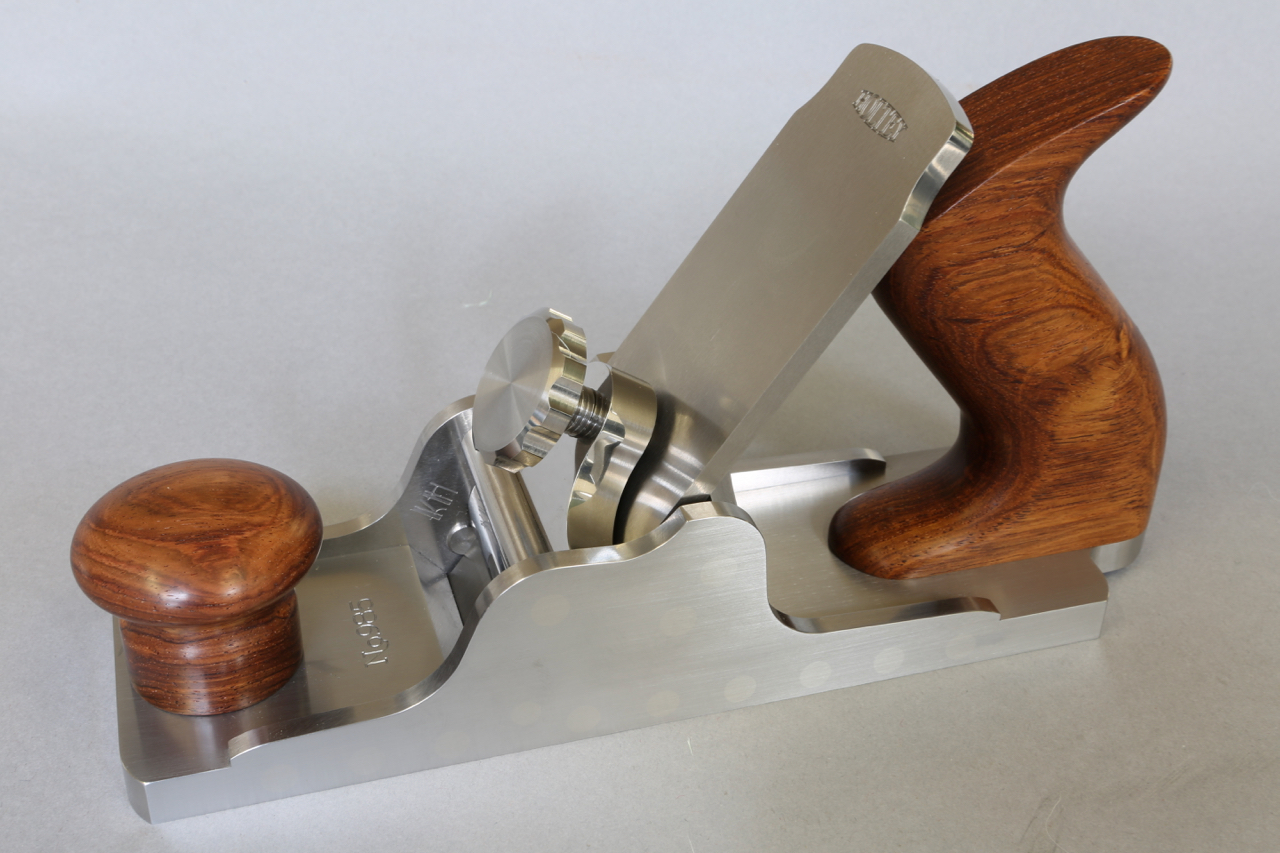
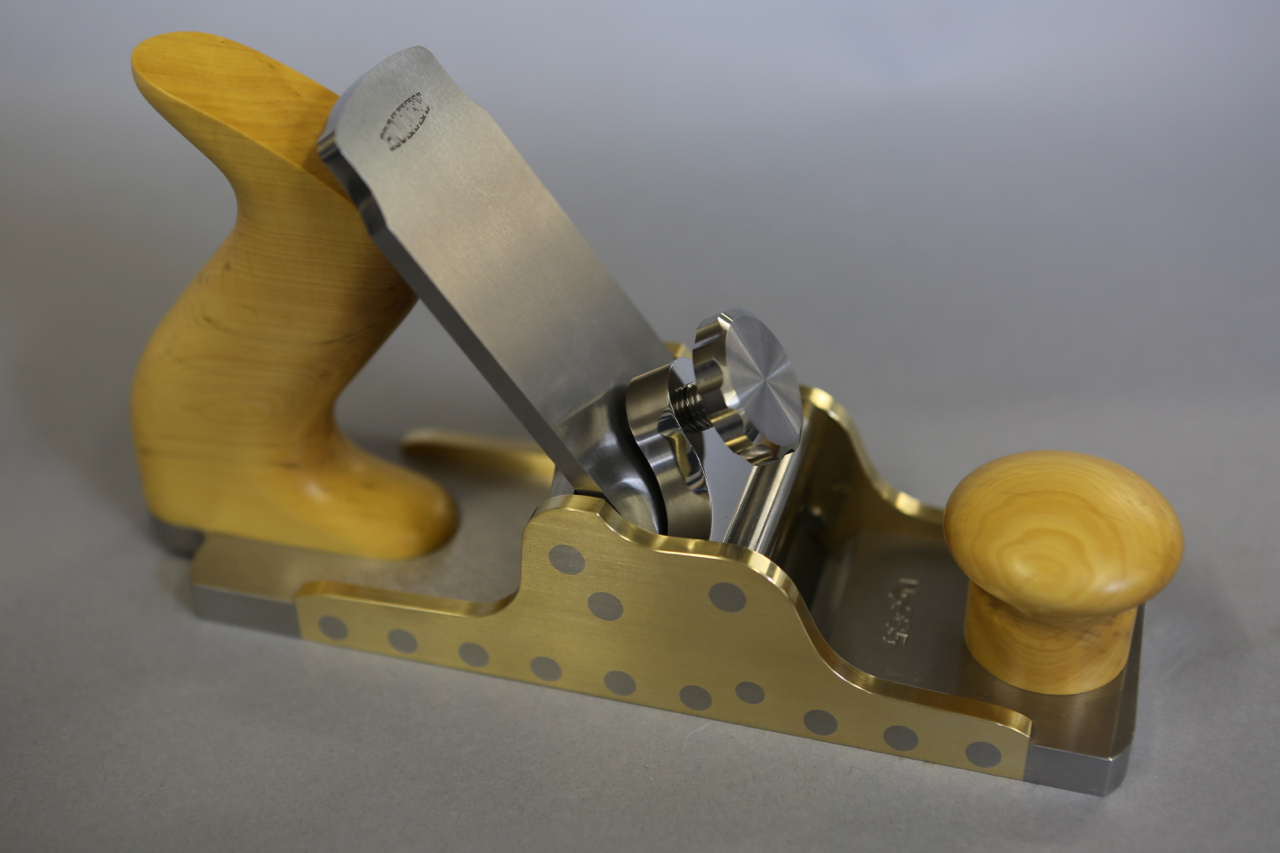
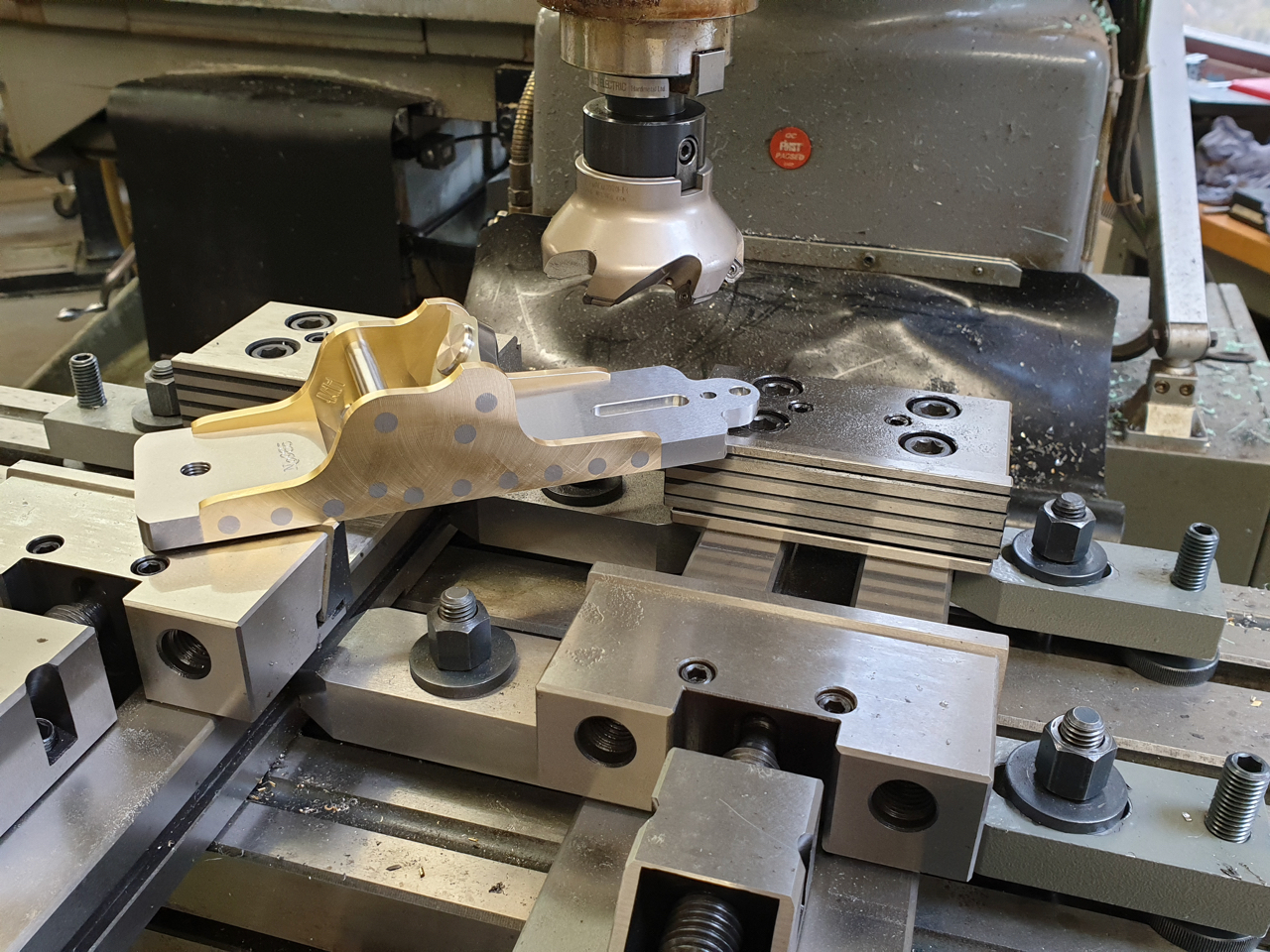
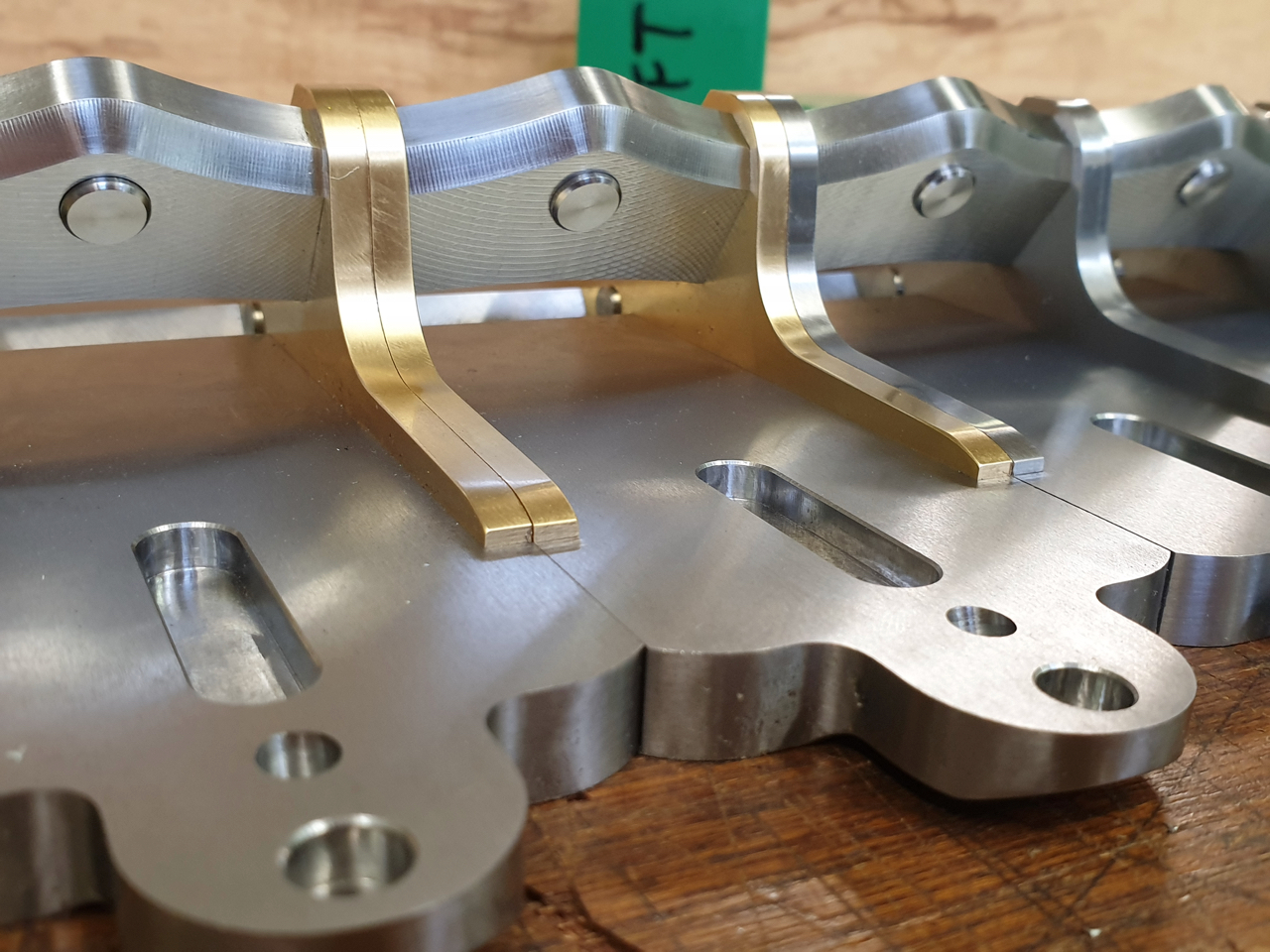
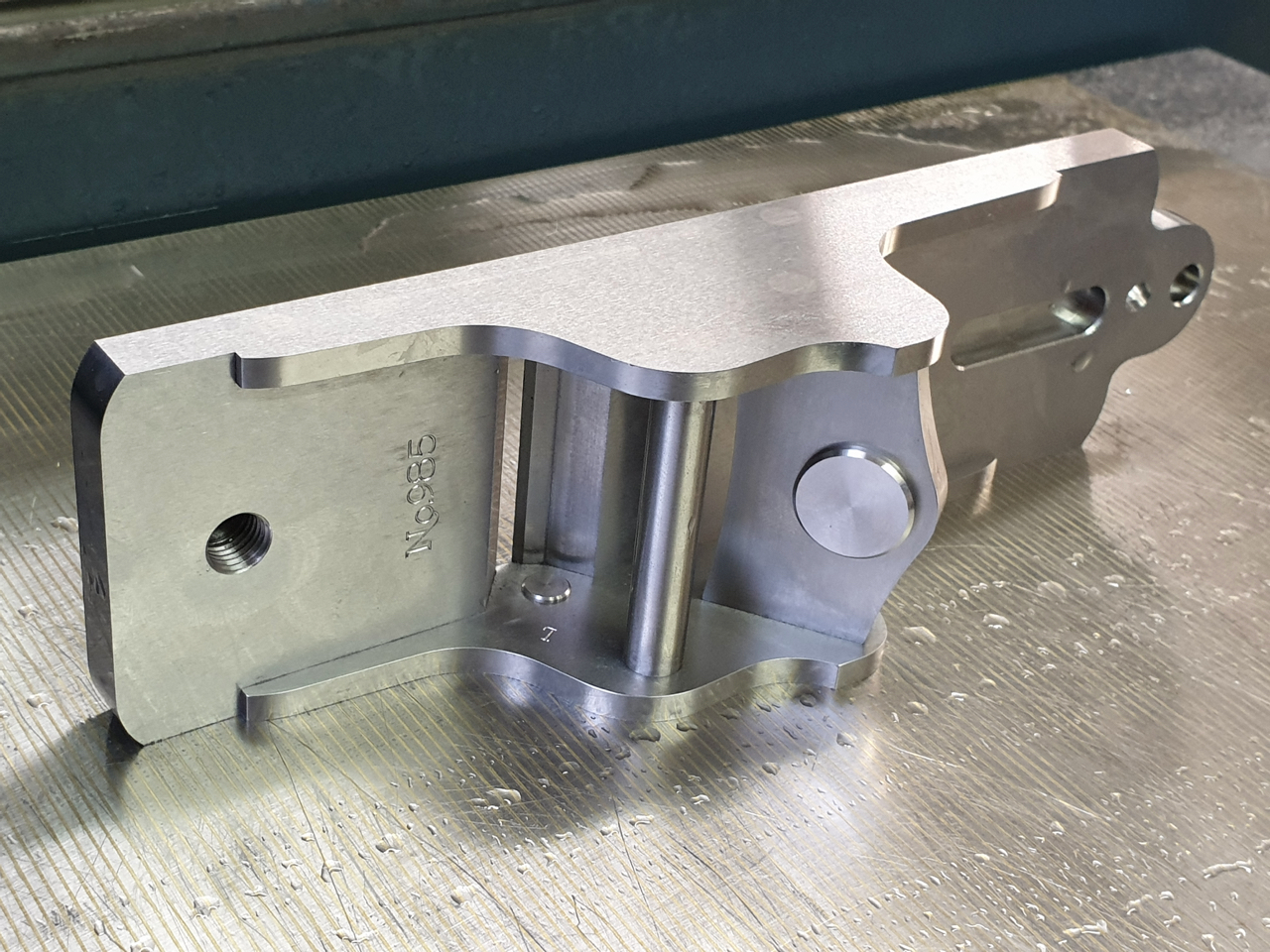
My current project is A1 14 ½” Panel planes. I have documented this before (use this link http://www.toolworkshop.co.uk/blogarchive/) so I am just putting a few pictures to look at.


April 17, 2012

Window to my workshop 61

What is a plane maker’s workshop?

When I first started making planes and was putting together a workshop with a very small budget, I had no idea what form the workshop was going to take – and I still don’t. I started with just a small Tom Senior milling machine, a 5” Raglan screw cutting lathe and a Fobco drill press. Looking back I can see that not only have I come a long way in improving my workshop but also in build and quality of my work. From the start I have always striven to make each plane better than the last. Although I have already covered the subject of my No 982 smoother plane elsewhere on the blog I thought that since I am currently working on the last batch (this plane is limited to 16 of each type, with and without brass cones) I would take the opportunity to described my workshop and some of the machines in it.
 
 
Jaespa W220DG Saw


In the beginning I was cutting everything by hand and didn’t even have a wood machine. It was a quantum leap just to get an ordinary band saw. After buying a pull down saw I found it unsuitable as it meant I had to be in attendance full time with the machine to pull down on the handle. I replaced it very rapidly with this Jaespa bow saw. It is the best friend any workshop could have. Very little gets passed this machine.


Here I am taking advantage of the 10 x 10” capacity to reduce the width of a pre-cut bar from my stock for the No 982 bottoms. This machine has a gravity feed controlled by a hydraulic valve which means that in the case of heavy workloads I don’t need to stand with the machine. This allows me to run more than one machine at a time (on occasions several machines).
 
 
The Milling


In the foreground is my workhorse. A Bridgeport Series II Interact 2, which must be 20 years old and like me, is showing its age. This was one of the early CNC mills controlled by an Heidenhain TNC 151 (by today’s standard it is an abacus). A replacement for this machine would cost a very nice new car.


As you will see throughout all my blogs I use it for many operations and here I am using it to mill and de-scale this hot rolled bar which is to be used for the No 982 bottoms.
 
This machine is my only experience in programming and it has taken me a long time to reach some proficiency. I wouldn’t want to replace this machine with a VMC but I would like a nice open style bed mill with an Heidenhain control (in my dreams).
 
Although my current machine performs many tasks it is still limited (in scope but not in work quality) and I sometimes find things easier to do on my manual mill. I have also become very dependent on DROs and no longer trust vernier readings.
 
It is such a wide range of work that this CNC mill does I no longer want to do my work without it. As much as I might want a CNC lathe I would sooner update my current mill first.
 
 
Jones and Shipman 1430 semi automatic surface grinder


Up until 9 years ago I outsourced the grinding for my blades and it was my experience that outsourcing is fraught with problems. I was extremely fortunate to find a machine of this quality which allowed me to do the grinding myself and enabling me to keep everything in house. The machine was originally made in the 1960’s but had just been rebuilt by Andmar (who work very closely with Jones and Shipman to achieve the good build quality). This machine has a good 2’ x 1’ chuck and it has proved very useful for much more than just blades. I have also become very dependent on it for tool making, as I make all my own tools and work holding jigs. In short, this machine has improved the standard of accuracy to everything that is made in my workshop.


All the bottoms and sides of my No 98 series planes are ground on all sides and again after assembly for the final finish.

October 24, 2011

Window to my workshop 57

Showing the continuing work to this non-adjuster blade. 
 

Work on the blades recommences now that they are back from hardening. 

This picture shows one of the many grinding operations.
 

Even the snecks have to be ground on one surface before they are assembled.
(more…)

October 17, 2011

Window to my workshop 55

No 10 smoother/mitre

A very patient customer asked me to make a small mitre plane. He wanted a 11/4” wide blade to be bedded at 25 deg and bevel up with a short body. No adjuster was required.

I would classify this plane as a smoother/mitre. The small mitre plane has always seemed to be surprisingly scarce for its usefulness. Having got my simple sketch approved the first batch is now well on the way (the sketch can be seen on the website here http://www.holteyplanes.com/).

It is a combined stainless steel bottom with naval brass dovetailed sides and brass lever cap and thumb screw. The blade is in my A2 original specification and has a top sneck. The length of the plane is 43/4“.

Despite its apparent austerity there will be no lacking in specification and quality. The designation will be No.10. Delivery will be end of November 2011.

What better place to start than the blades.  Here are the A2 blanks being drilled and shaped.  These are now away being heat treated (the only work to be done out of house).


Brass sides have been cut from sheet and trued up into rectangular blanks. 
(more…)

September 7, 2011

Window to my workshop 54

The final part of the A6 construction.
 

Drilling and countersinking frogs for the rivets.
 

The bottom has been slotted out for mouth and drilling for the corresponding  frog rivets.
(more…)

August 9, 2011

Window to my workshop 53

Adjuster components for A6
 

This item is most commonly known as the banjo and it is the most work intensive component in the whole plane.  This picture shows that it comes out of a round bar.


 There is a lot of preparation but this is not a step by step instruction manual, it is just a few snapshots.  In these pictures, after lots of preparation I start to ball generate the round part of this component. 
(more…)

August 2, 2011

Window to my workshop 52

A6 Part 2

*************
 

All of the woodworking has its edges squared up on the milling machine as I have a bit more confidence in this machine than I do a planer.


A pair of infill sides being drilled for riveting spacers. At this stage all edges are trued up


This is the infill side with the spacers pressed through the handle testing for fit. The two sides have yet to be separated.

(more…)

July 31, 2011

Window to my workshop 51

The last batch of A6 planes part 1

After receiving a commission for an A6 smoother I decided to make a batch of six. The A6 is probably the most time consuming of the infill planes (well perhaps the A7 is worse!). When using the designation A6 one should realise that my A6 is not to be compared with the Norris or any other plane of this type – it is made to a higher precision and has some innovations not seen in the original. This standard is beyond the scope of those without a tool room; I am not aware of any comparison. I work from a reasonably equipped tool room; not a production line. All work is done in house with the exception of heat treatment for the blades.

Although this model has been blogged before I am running it through again as this A6 is just that little bit more special. I always try to make the current plane better than the preceding one. Also these will be the very last Holtey A6 planes. For all my innovations and upgrades my work is veiled by the Norris history and I feel it is time to move on.

************************

The first part of starting the plane is to get the timber chosen and prepared so giving the wood some time to settle whilst making a start on the metal work.
 

Here is a stunning piece of Cocobolo (Dalbergia Retusa) which was cut from a very nice log that I acquired from Timber Line a couple of years ago – thanks to a friend who spotted it on a visit there. This is the basic roughing out for the infill components.


With the wood put aside to rest, a good starting point is the blades as they need to be sent away for the heat treatment. This shows the milling of the faceted end and slot.
(more…)

February 13, 2011

Window to my workshop 50

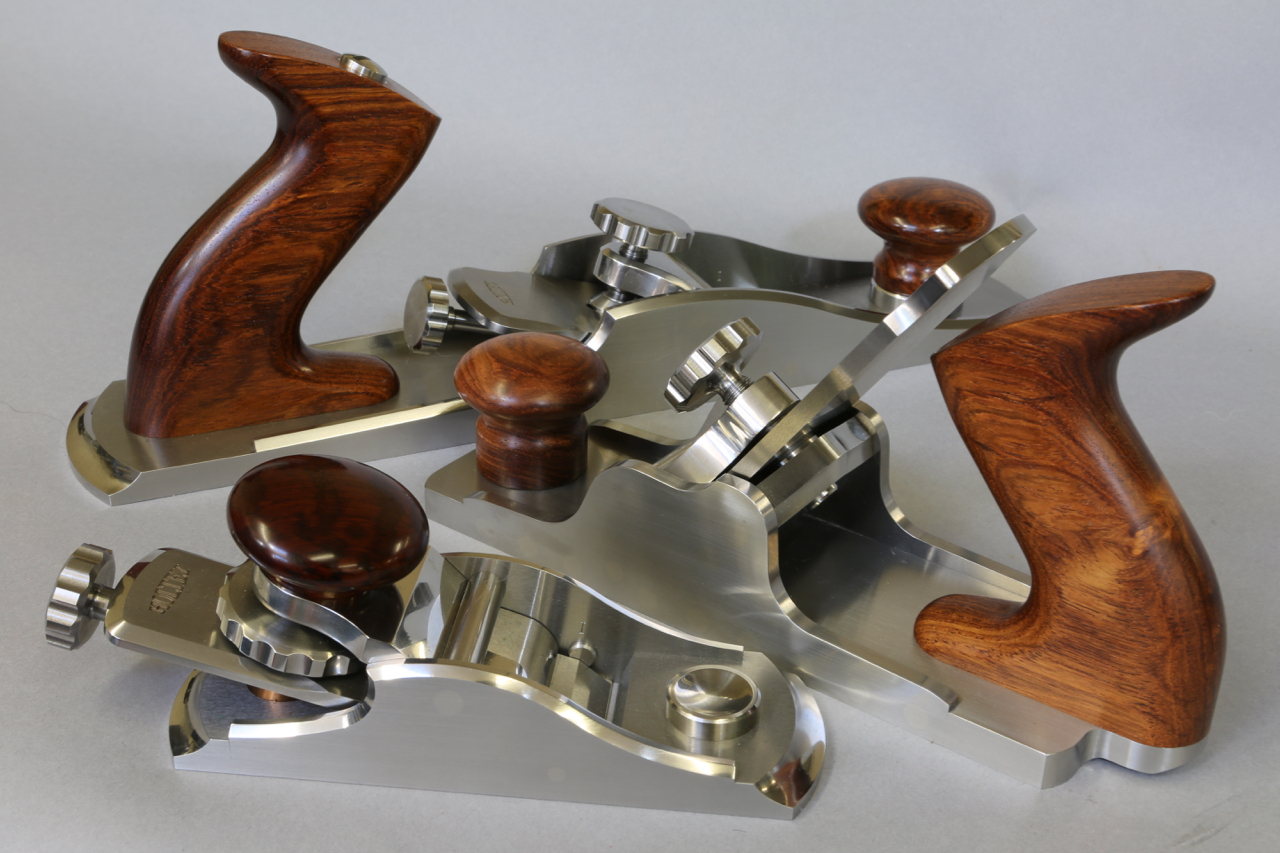
Some pictures of the completed No 982 panel planes (14 1/2″).  I made a limited edition of 8 of these planes, a few were made with the brass cones. 


(more…)

October 18, 2010

Window to my workshop 49

I have just found this blog entry for No 982 smoother that I forgot to finish.  As it is very similar to the blog entry for the No 982  panel plane 14 1/2″  I have already done this week I thought I would just publish the pictures with no comments.

(more…)

Powered by WordPress