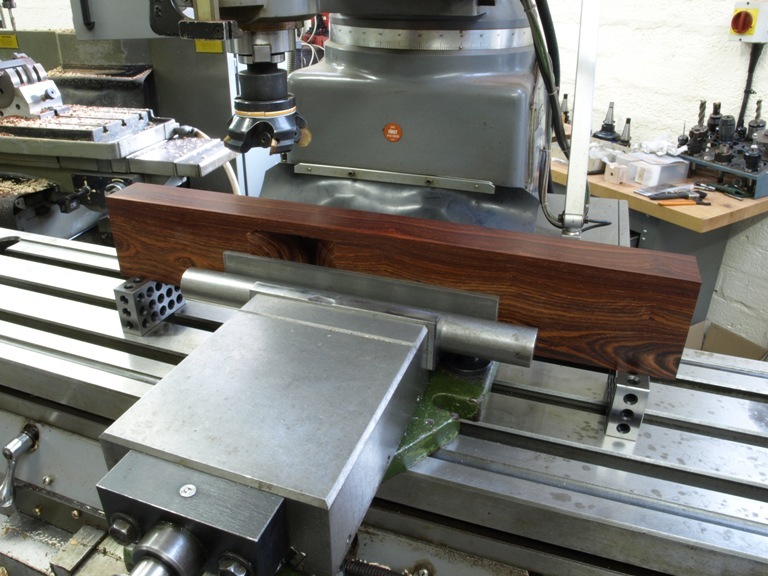
I thought I would put this picture up for the benefit of the customer who is buying it. I plane all round for truing up. As you will notice I have chosen to do all my planing on the milling machine as it will plane true without any tearing when it comes to the more difficult grains. I achieve more accuracy this way than I would do on an ordinary planer/thicknesser.
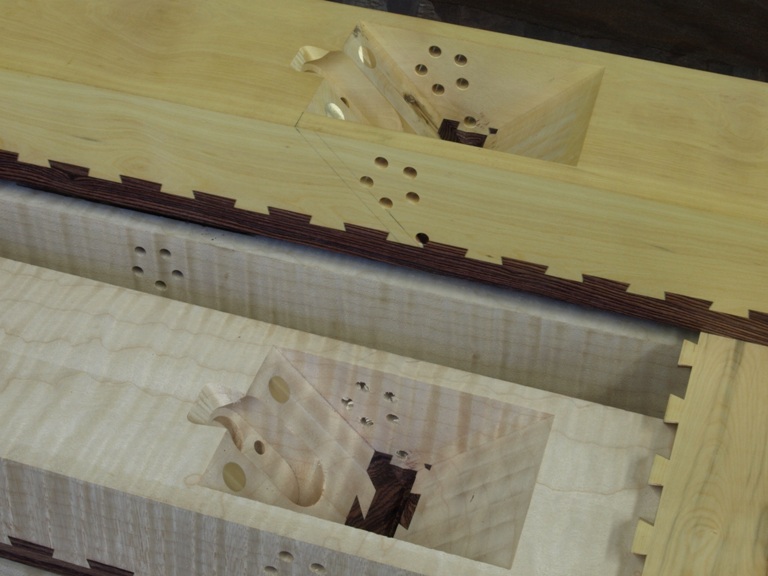
Just a nice picture of the throat area.
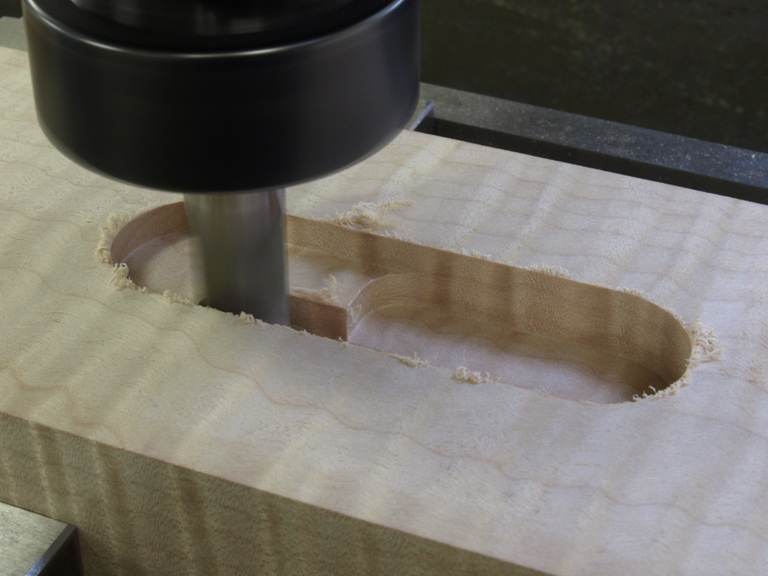
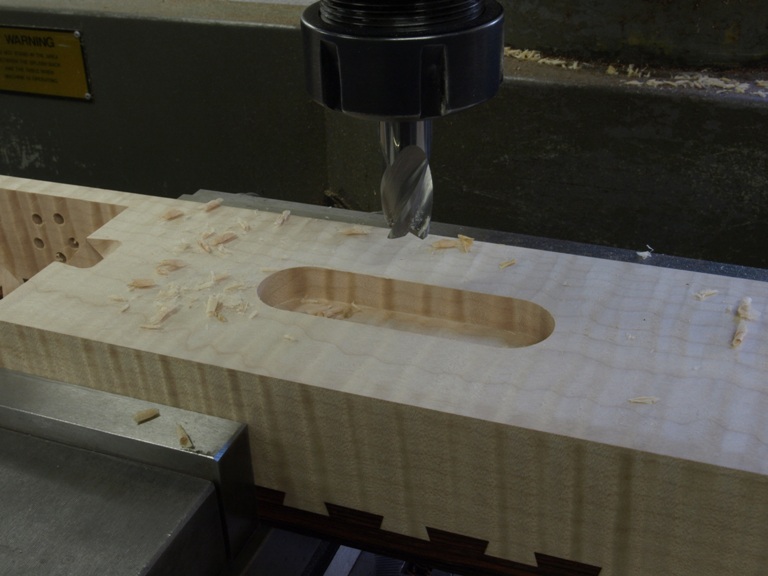
Recessing for the rear handle using the CNC mill.
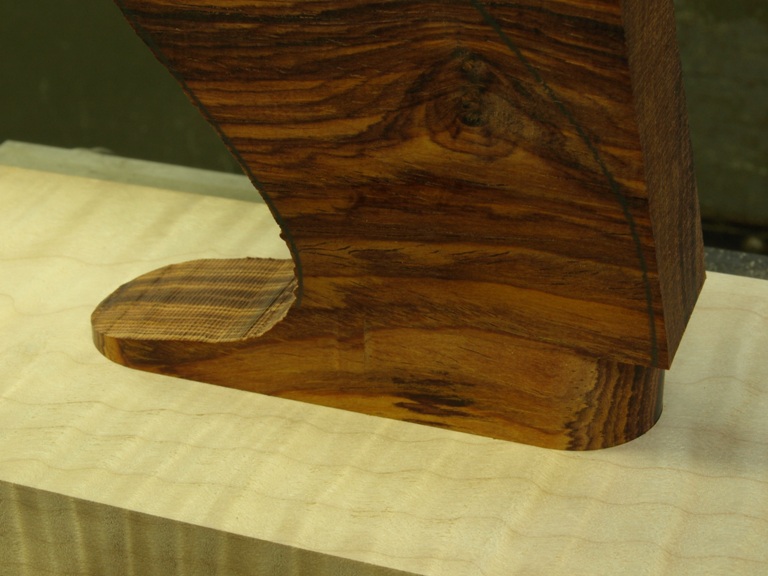
With the base of the handle also CNC’d fits first time, every time. This handle is made removable.
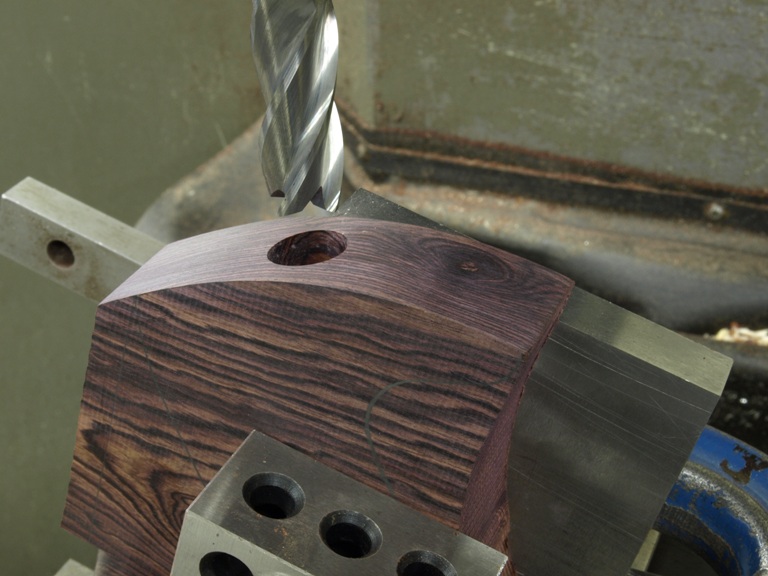
The counterbore in the top of the handle.
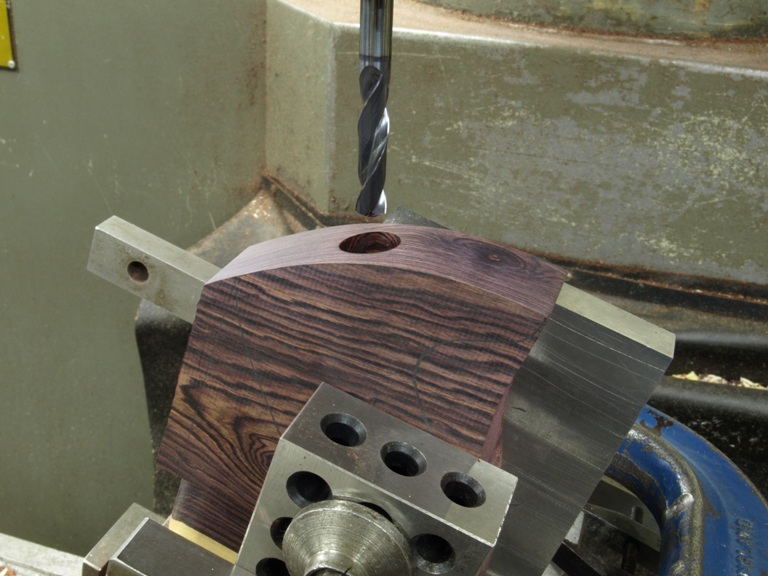
Using solid carbide drill makes a good centre and starting drill for the main bore.
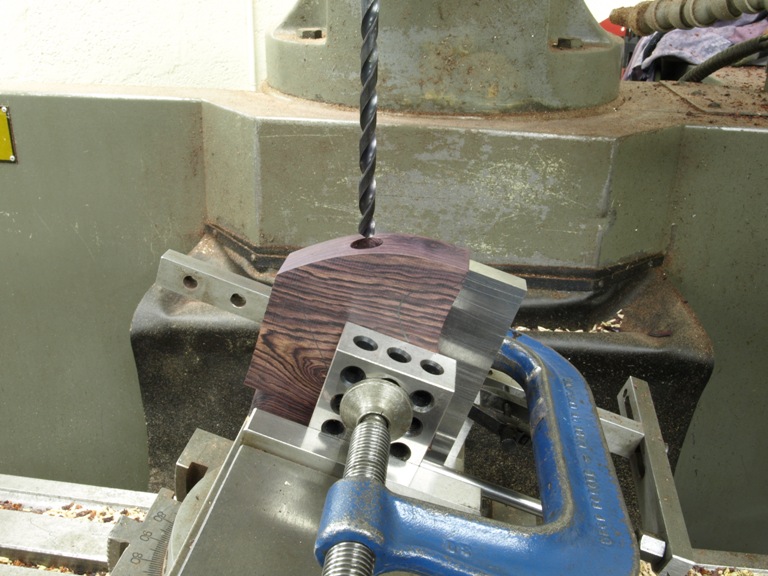
With an extra long drill I am able to drill through the entire depth of the handle with a surprising degree of accuracy.
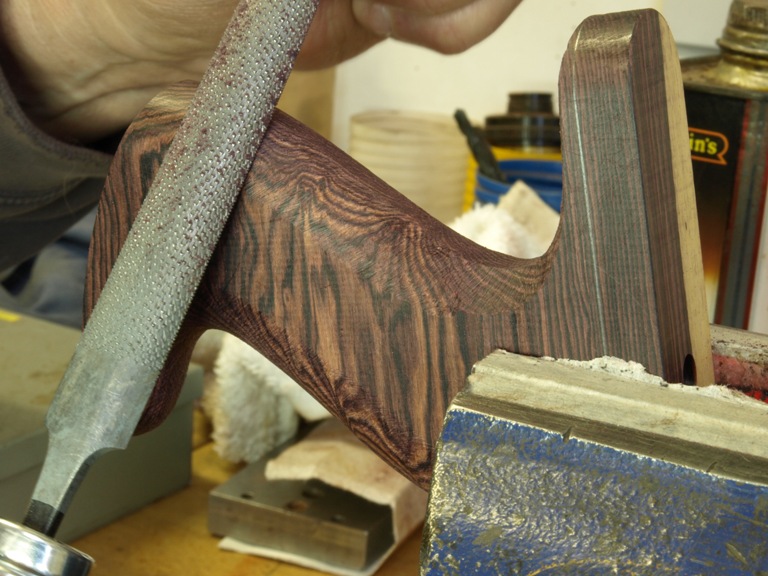
Using the Holtey machine to shape the handles.
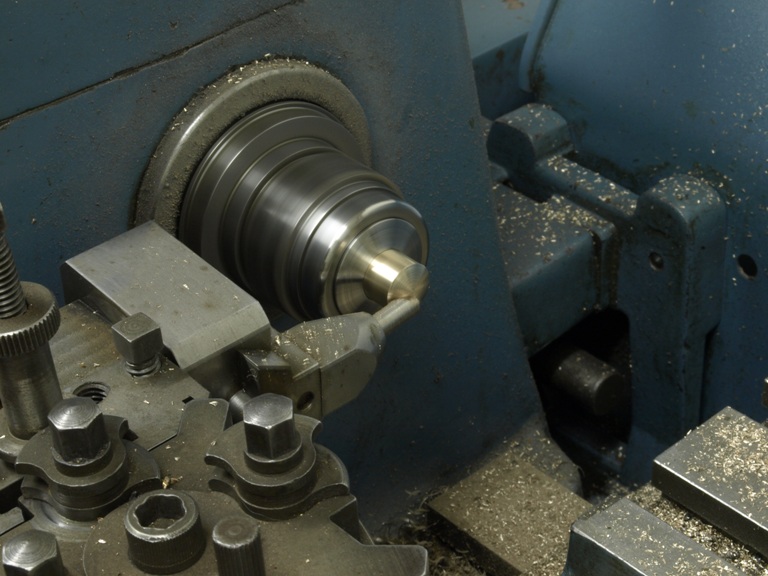
Convexing the top of the brass handle retaining nut.
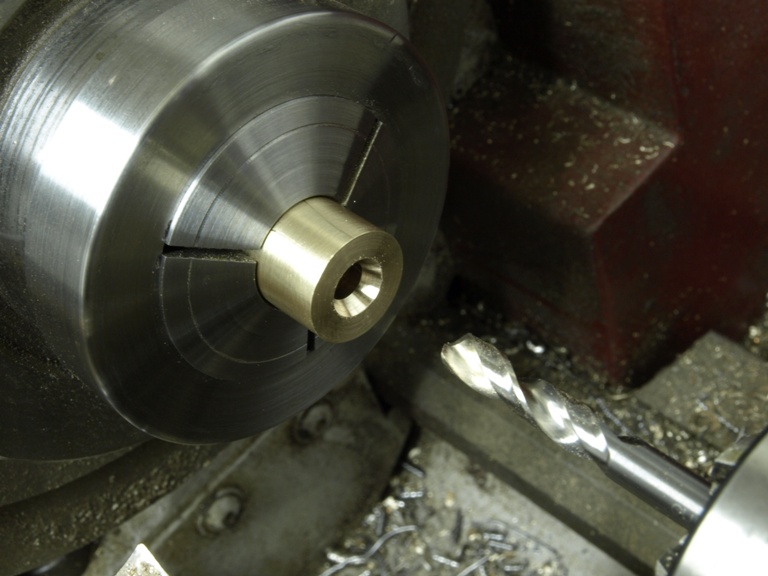
Drilling the blind hole ready for tapping of the handle retaining nut. Notice the small countersink which will assist in work holding further ahead.
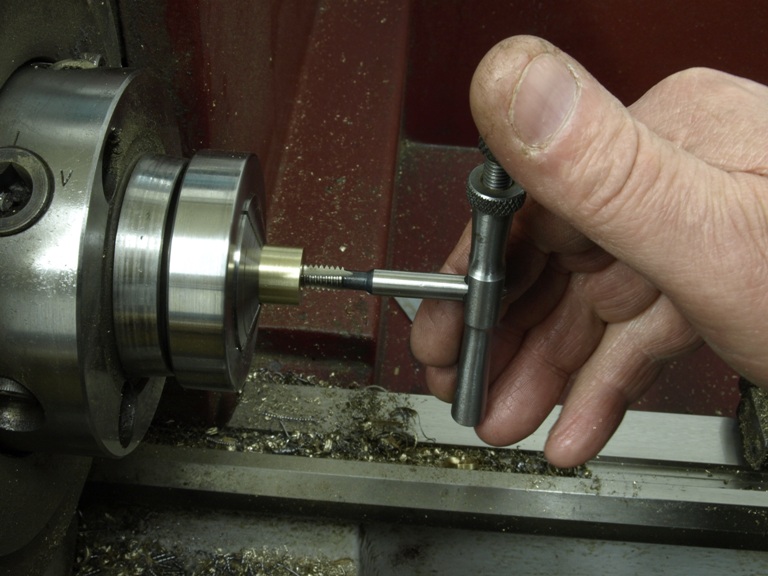
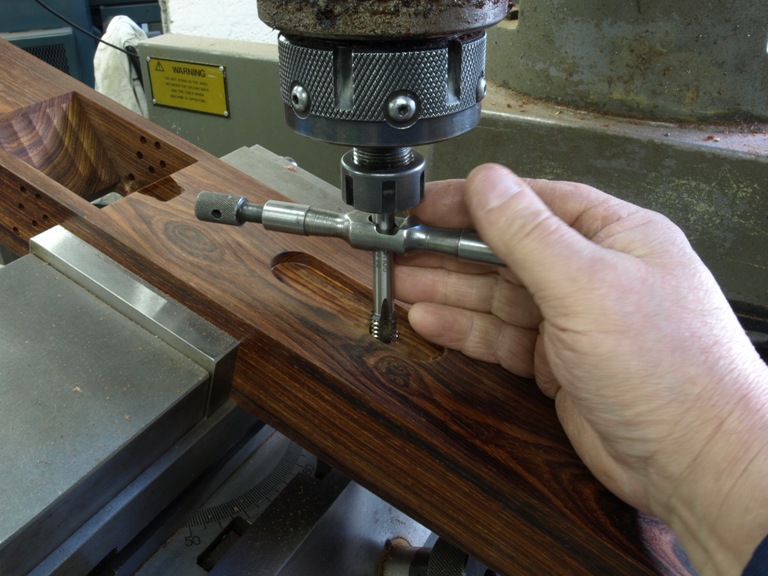
Tapping the ¼” Whitworth thread for the stainless steel handle fixing nut.
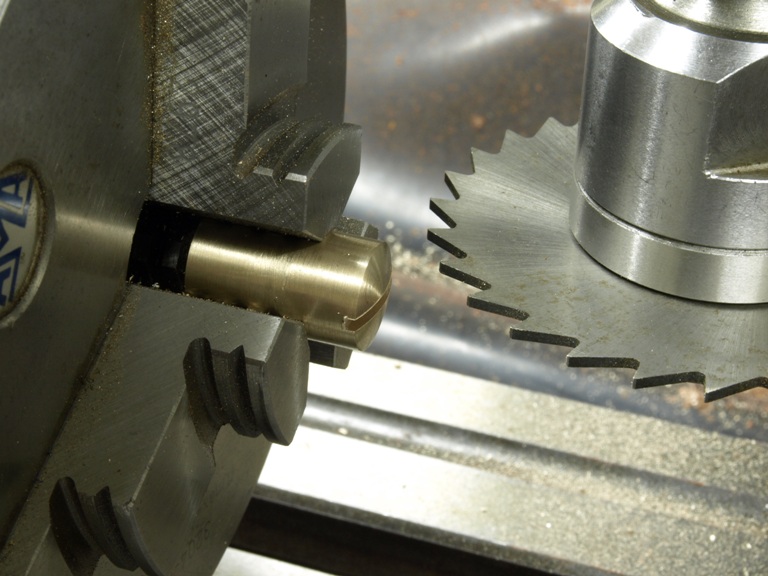
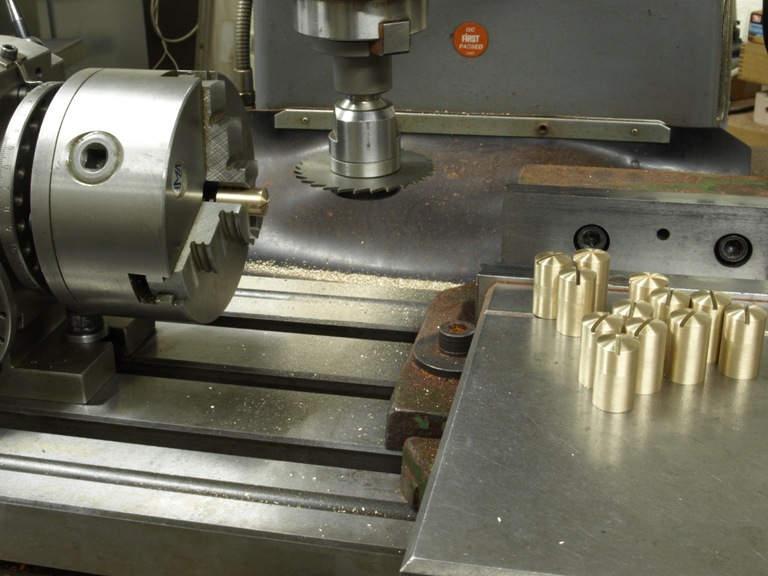
The drive slot being cut for the above nut.
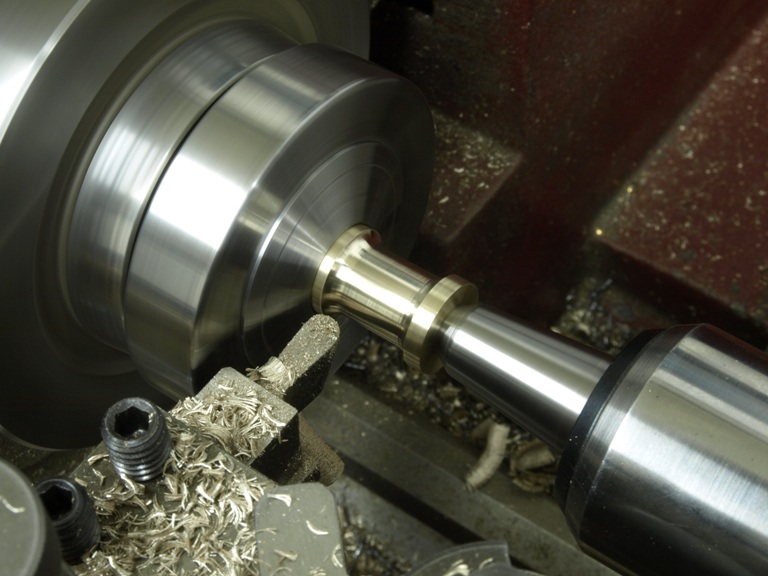
Here I am waisting the centre of the retaining nut.
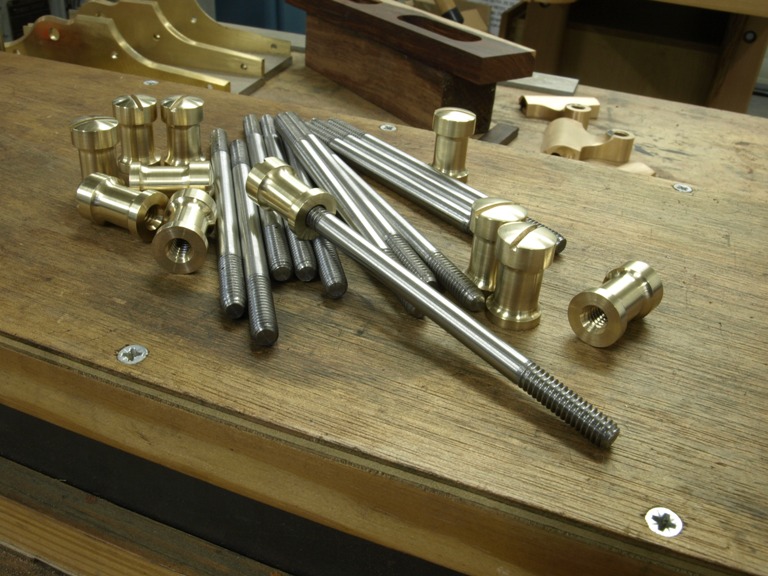
Handle fixing showing the 1/4″ stainless steel rods.
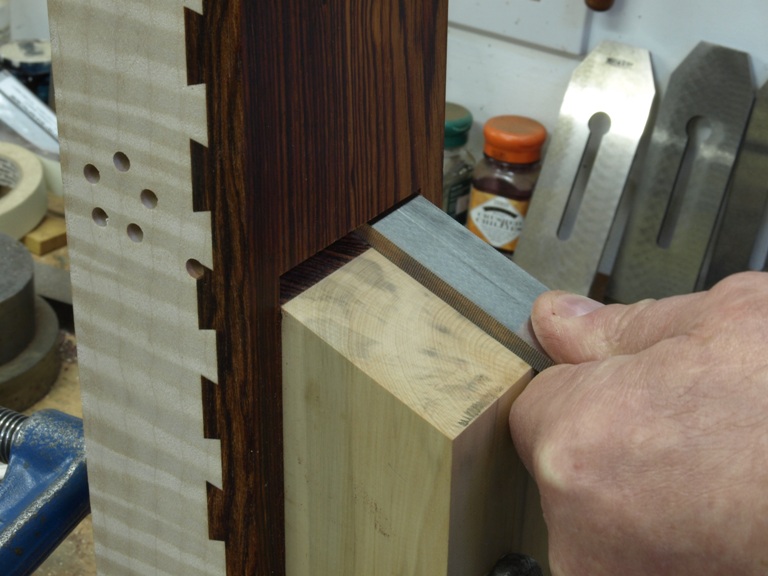
Tweaking out the mouth using a file with safe sides.
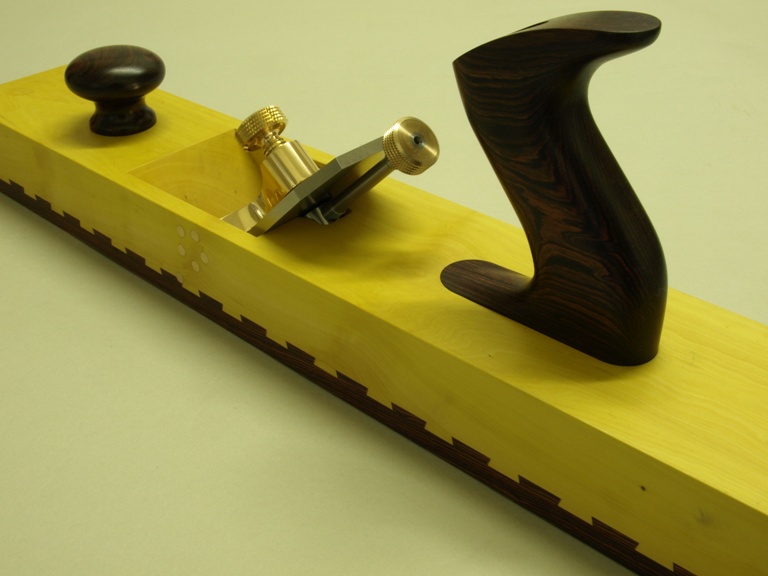
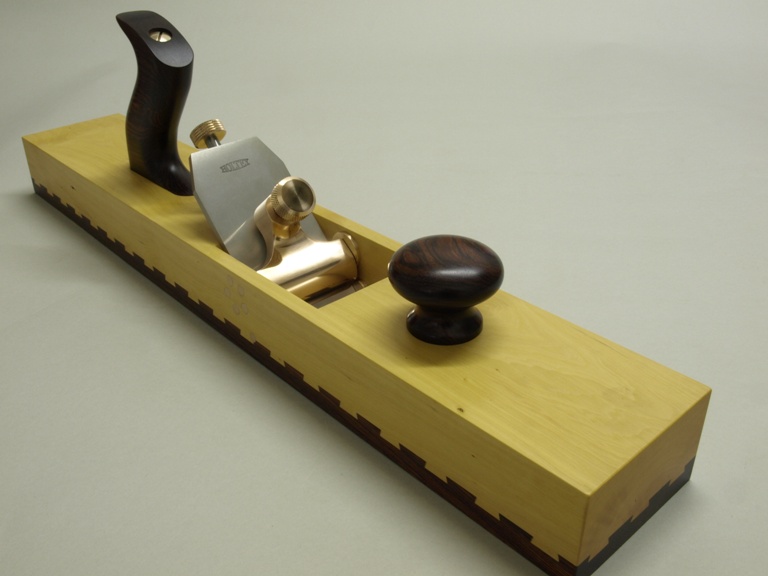
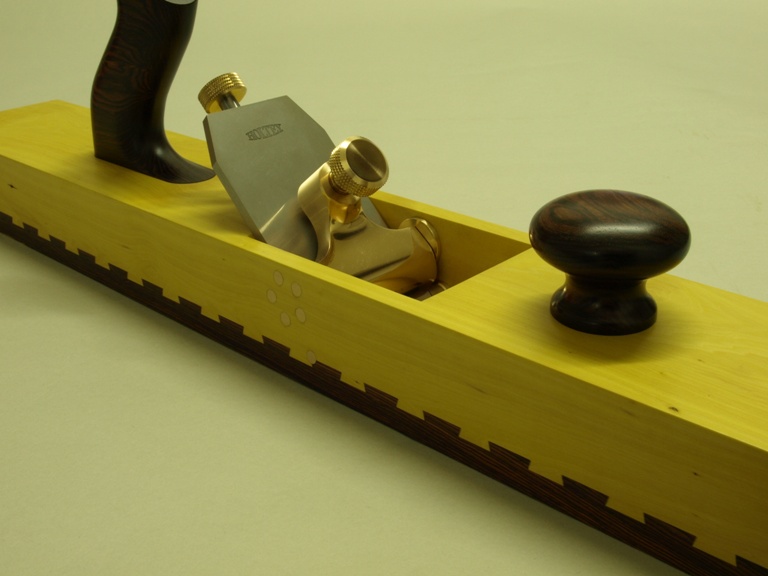
Various views of the same Boxwood plane. I will post the quilted maple ones on the website shortly.
Karl,
On the solid cocobolo one the throat area appears to be further forward than on the boxwood and maple versions. Is this the case ? or is the cocobolo one longer than the others ? or option 3 none of the above purely a photographic illusion ?
Archie.
Comment by Archie — January 3, 2010 @ 8:01 pm
Hi Archie
Option 3, I like just having a box to tick
k
Comment by admin — January 4, 2010 @ 3:49 pm
Absolutely stunning Karl, your blog is awe inspiring!!
Carry on with the good work.
Cheers
Aled
Comment by Aled — January 4, 2010 @ 4:10 pm
Hi Aled
Thanks for your compliments.
k
Comment by admin — January 6, 2010 @ 10:34 am
Like everyone else I am impressed and fascinated by these glimpses into your workshop. I’m personally interested in the question of woodworking/wood finishing on the milling machine and wondered if you have had any issues with the relatively slow spindle speeds of a mill (compared to e.g. routers with speeds up to 20,000)?
Thanks
Andrew
Comment by AndrewG — January 10, 2010 @ 1:36 pm
Hi Andrew
Thank you for your comments. I would like to have a bit more spindle speed but it does work fine. There are some woods that prefer a slower speed even with the milling machine as the cutters tend to burn the wood even when sharp.
k
Comment by admin — January 14, 2010 @ 12:25 pm
Absolutely gorgeous – I’m in love.
Comment by Mark Briley — January 28, 2010 @ 4:45 am
Thanks for your appreciation
k
Comment by admin — January 28, 2010 @ 9:47 am
Karl is that your new apprentice ?
The Abominable Planemaker?
I love the Blog I have not checked it in awhile..
Thanks Much for Sharing………
Johnny K
Comment by Johnny Kleso — October 17, 2010 @ 2:27 am
Just tripped your web site. Have to say, very professional. Nice to see some craftsmen left in UK.
Comment by peter sigournay — October 22, 2010 @ 5:49 pm
Hi
Thank you for your nice comments.
k
Comment by admin — October 28, 2010 @ 2:02 pm
Some love expensive cars, boats or houses. As a woodworker of some 40 years, I would own one of every plane you make if I could only afford them. Absolutely beautiful work.
Comment by Jack Palmer — October 10, 2011 @ 8:32 pm